

Hashtags
Taylor Fritz: America’s Steady Hand in the New Era of Men’s Tennis
Taylor Fritz’s emergence as a consistent top-10 ATP player represents both personal triumph and symbolic significance for American men’s tennis, which has spent two decades searching for stars capable of filling the enormous void left by Pete Sampras and Andre Agassi’s retirements. While American tennis fans desperately wanted the next great champion to announce himself through dramatic Grand Slam breakthroughs and dominant world No. 1 campaigns, Fritz has instead carved a more patient path—accumulating Masters 1000 titles, reaching Grand Slam finals and semifinals, and establishing himself as the reliable American presence in the sport’s elite tier even if the ultimate championship glory remains tantalizingly just beyond reach. This steady excellence without breakthrough moments creates complicated narratives around Fritz’s career, as achievements that would define success for players from smaller tennis nations are measured against expectations that Americans should dominate rather than merely compete at tennis’s highest levels.
The current state of men’s tennis—where the Big Three era of Federer, Nadal, and Djokovic has finally given way to younger champions including Carlos Alcaraz and Jannik Sinner—creates both opportunities and challenges for Fritz as he enters what should be his competitive prime at age 27. The window for American Grand Slam champions has seemingly never been more open given the absence of the historically dominant champions who blocked paths to titles for over 15 years, yet Fritz faces the frustrating reality that even without the Big Three, formidable obstacles remain in players whose games seem ideally constructed to exploit the specific weaknesses that have prevented his own championship breakthroughs. This tension between opportunity and limitation defines Fritz’s career trajectory as he attempts to convert consistent excellence into the major championship that would validate his career and satisfy American tennis’s hunger for champions.
Current Status as a Top 10 ATP Player (as of Jan 2026)
Fritz’s ranking inside the ATP’s top 10 as of January 2026—currently positioned at No. 9—represents sustained elite performance across multiple seasons rather than temporary peak that often sees players briefly crack the top 10 before regression to more natural levels. This consistency distinguishes Fritz from flash-in-the-pan American hopes who occasionally produce exciting results but cannot maintain the week-in, week-out excellence required for top-10 stability. His ranking reflects accumulated points from Masters 1000 semifinals and finals, ATP 500 titles, and solid Grand Slam results that collectively demonstrate comprehensive professional competence even when individual tournament victories don’t generate headline-grabbing narratives.
The practical implications of top-10 ranking extend beyond mere prestige to include Grand Slam seeding that provides favorable draws avoiding the sport’s absolute elite until latter rounds, qualification for season-ending ATP Finals where the year’s best eight players compete for substantial prize money and ranking points, and the psychological confidence that comes from knowing the tour’s computerized ranking system validates his belonging among tennis’s current best. These tangible benefits create self-reinforcing cycles where good ranking produces better draws, which produce deeper tournament runs, which maintain the ranking that ensures continued favorable draws.
Fritz’s career earnings approaching $20 million demonstrate the financial rewards that sustained top-tier performance generates even without Grand Slam titles, as Masters 1000 finals, ATP 500 victories, and consistent Grand Slam advancement produce substantial prize money accumulation across seasons. While these earnings pale compared to the generational wealth that Djokovic, Federer, and Nadal accumulated through combining prize money with endorsements driven by championship pedigree, Fritz’s earnings represent genuine financial success and reflect tennis’s capacity to reward sustained excellence even when ultimate glory proves elusive.
Biography: The Early Years
Family Pedigree: Being the Son of Former Top-10 Player Kathy May
Taylor Fritz’s tennis pedigree through his mother Kathy May—herself a former top-10 WTA player who reached a career-high ranking of No. 10 in 1977—provided both tremendous advantages through access to elite coaching, understanding of professional tennis’s demands, and genetic gifts for the sport, while also creating expectations and psychological pressures that children of famous athletes universally navigate. May’s insider knowledge of professional tennis allowed Fritz to avoid many pitfalls that derail promising talents who lack guidance about training methodologies, physical development, mental preparation, and the countless unsexy details that separate players who reach their potential from those who squander opportunities through ignorance or poor decision-making.
The family connection also provided Fritz with belief that professional tennis excellence was achievable rather than fantasy, as he witnessed firsthand that people from his family could compete at the sport’s highest levels. This normalized excellence in ways that often prove crucial for young athletes whose self-belief must sustain them through the inevitable setbacks, injuries, and doubts that accompany athletic development. However, the family legacy also created implicit pressure to match or exceed his mother’s achievements, with every milestone compared against May’s career and evaluated through frameworks of whether Fritz was living up to his genetic advantages and developmental opportunities.
The Decision to Turn Pro in 2015 After a Record-Breaking Junior Season
Fritz’s decision to turn professional in 2015 following a record-breaking junior season that included the US Open boys’ championship and year-end No. 1 junior ranking reflected confidence that his skills had developed sufficiently for professional competition and that delaying the transition would waste valuable years of physical prime that could be spent accumulating professional experience and ranking points. The timing proved prescient, as Fritz’s smooth transition to professional ranks validated that his junior success reflected genuine talent capable of translating to adult competition rather than merely physical precociousness that would disappear once opponents matured physically.
The record-breaking junior season provided psychological foundation for professional confidence, demonstrating Fritz could perform under pressure when championships were at stake rather than merely training well or succeeding in low-stakes situations. This championship mentality—the capacity to elevate performance when pressure intensifies rather than shrinking from big moments—represents perhaps the most crucial quality separating good professionals from champions, and Fritz’s junior success suggested he possessed this temperament even before testing it against professional opponents.
Career Highlights & Evolution
Masters 1000 Success: The Landmark 2022 Indian Wells Victory
Fritz’s 2022 Indian Wells Masters 1000 title stands as the defining achievement of his career to date, providing validation that he belonged among the sport’s elite while demonstrating capability to win the biggest tournaments outside Grand Slams when everything aligned—form, health, favorable draws, and the mental fortitude to close out championship matches against dangerous opponents. The victory came at a particularly opportune moment in his development, as Fritz was establishing himself as consistent top-20 player but faced questions about whether he could win the tournaments that separate very good professionals from genuine stars.
The Indian Wells victory’s significance extended beyond mere title accumulation to encompass the manner of victory—defeating Rafael Nadal in the final despite playing through an ankle injury that required regular treatment between games. The triumph demonstrated both Fritz’s shotmaking capability when playing his best tennis and the competitive toughness required to win major titles even when physically compromised, as champions routinely face challenges requiring them to perform through pain or illness that would provide convenient excuses for lesser competitors.
The Masters 1000 title also represented crucial validation for American men’s tennis, as Fritz became the first American man to win a Masters 1000 title since 2018, ending a drought that highlighted American tennis’s struggles to develop champions even at levels below Grand Slams. The victory provided tangible evidence that American men could win big tournaments rather than merely participating respectably, creating optimism that Grand Slam breakthroughs might follow as Fritz continued developing.
Grand Slam Progression: From the 2024 US Open Final to the 2025 Wimbledon Semifinals
Fritz’s 2024 US Open final appearance represented his breakthrough Grand Slam performance, demonstrating capability to navigate two weeks of best-of-five tennis against the world’s best players while handling the enormous pressure of playing at home as America’s great hope for a men’s champion. The final appearance, though ending in defeat, proved that Fritz possessed the physical stamina, mental fortitude, and tennis quality required for Grand Slam success, as reaching finals demands comprehensive excellence across all match components rather than merely one or two exceptional strengths.
The experience of competing in a Grand Slam final, even in defeat, provides invaluable learning about the specific pressures and challenges that championship tennis creates. Fritz now possesses firsthand knowledge of what grand stage pressure feels like, how to manage the two-week tournament grind, and what tactical and technical adjustments allowed him to reach the final while also understanding what prevented him from winning it. This experiential knowledge should theoretically make future Grand Slam campaigns more successful as Fritz can apply lessons learned rather than navigating unfamiliar territory.
The 2025 Wimbledon semifinal extended Fritz’s Grand Slam résumé, demonstrating that his US Open final wasn’t a fluke but rather reflected genuine capability to compete deep into majors when playing his best tennis. The Wimbledon run also showcased versatility, as succeeding on grass’s faster surfaces requires different skills than the hard courts where Fritz had previously found his greatest success. This surface adaptability suggests Fritz’s game contains fewer exploitable weaknesses than critics sometimes claim, as truly limited players struggle to succeed across multiple surfaces while more complete players can adjust tactical approaches to different conditions.
Team Success: United Cup Championships and Olympic Bronze with Tommy Paul
Fritz’s United Cup success demonstrated his value in team competitions where collective results matter alongside individual performance, showcasing leadership qualities and ability to perform under different pressure dynamics than individual tournaments create. Team competitions reward players who can elevate teammates’ performances through example and encouragement while delivering their own points when team success depends on individual victories. Fritz’s consistent United Cup performances indicate he thrives in these team environments rather than feeling additional pressure from knowing others depend on his results.
The Olympic bronze medal earned alongside Tommy Paul in doubles competition provides tangible international recognition and achievement that exists separately from ATP ranking points or prize money. Olympic success carries particular prestige in tennis, where opportunities occur only once every four years and where many of the sport’s greatest champions prioritize Olympic medals alongside or even above some professional titles. The bronze medal demonstrates Fritz’s doubles capabilities while providing a championship moment and podium celebration that individual tennis’s structure rarely creates outside of winning tournaments.
Playing Style & Technical Mastery
Forehand Mechanics: Why His Lower Take-Back and Extreme Grip Are Unique on Tour
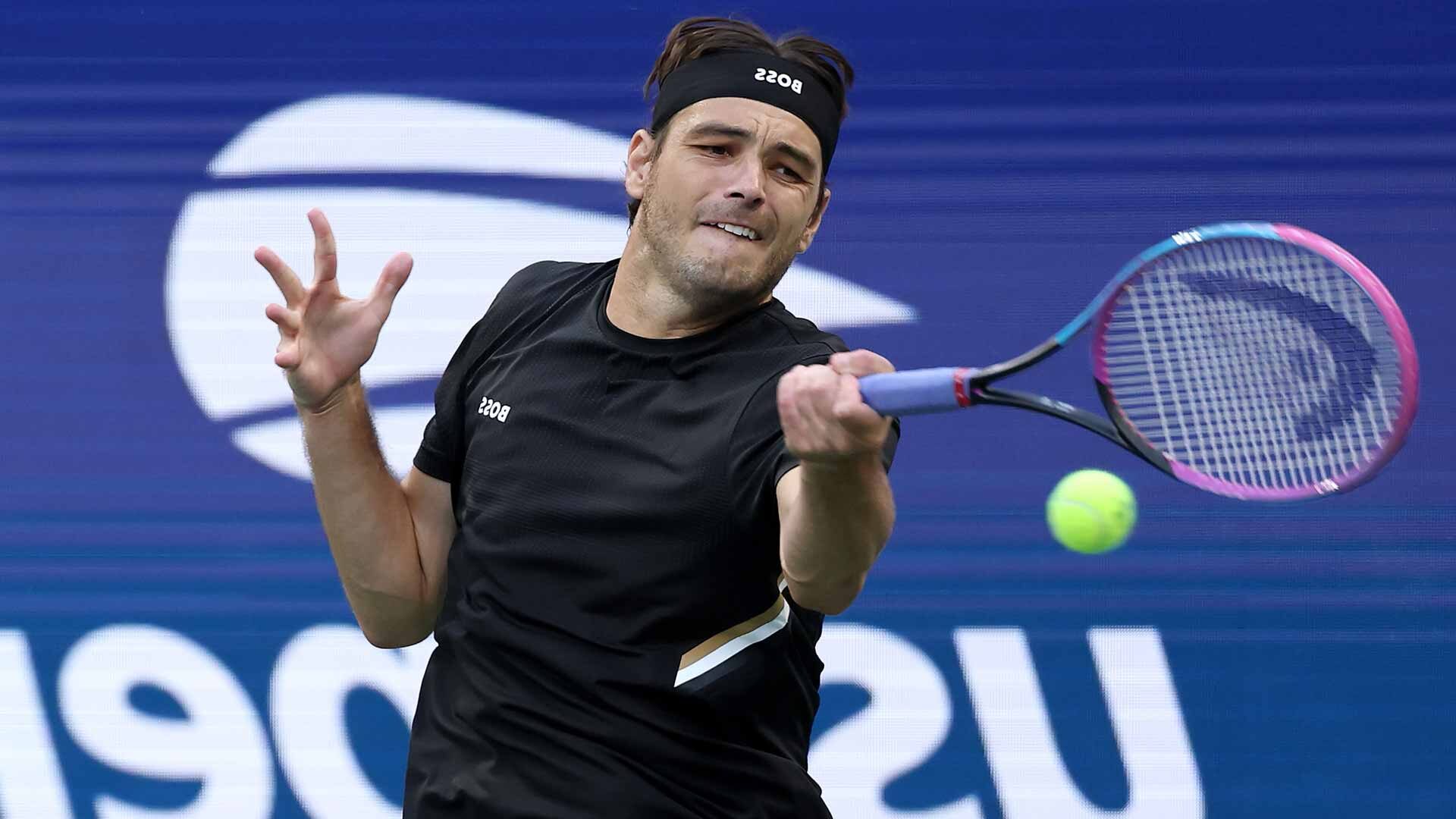
Fritz’s forehand mechanics feature distinctive elements that separate his technique from conventional modern forehands while producing the power and spin required for contemporary professional tennis. The lower take-back—where Fritz’s backswing keeps the racquet head relatively low rather than lifting it high behind his body—creates more compact swing path that generates power through racquet head acceleration and optimal contact point rather than through long, looping swings that modern coaching often emphasizes. This compact motion provides consistency and reduces timing variables that can make long, complicated swings prone to breakdown under pressure.
The extreme grip that Fritz employs—likely a strong semi-western or full western grip that positions his hand significantly behind the racquet handle—allows him to generate substantial topspin that keeps powerful shots inside the baseline while creating difficult bounces that rise uncomfortably into opponents’ strike zones. However, extreme grips create vulnerabilities on low balls and slices that stay low, as the extreme hand position makes it difficult to get racquet strings cleanly underneath very low bouncing balls for effective counterpunching. This tradeoff—enhanced topspin generation and power production in exchange for reduced effectiveness on low balls—represents one of many technical compromises that all forehand grips require.
The uniqueness of Fritz’s forehand mechanics raises questions about why his approach differs from conventional modern technique, suggesting either that he discovered technical innovations that coaches haven’t widely recognized, or that his specific physical characteristics and movement patterns make these unconventional mechanics more effective for him than standardized techniques would be. The success Fritz has achieved with this distinctive technique validates that there isn’t one correct way to hit forehands and that players can succeed through technical approaches that don’t match textbook models when those approaches suit their specific physical gifts and tactical preferences.
The “Sword” vs. “Shield” Strategy: Dictating Points with the Forehand While Maintaining Backhand Stability
Fritz’s tactical approach centers on using his forehand as primary offensive weapon—the “sword” that dictates points and creates winning opportunities—while employing his backhand as defensive “shield” that neutralizes opponents’ attacks and prevents them from controlling rallies even when Fritz can’t immediately counterpunch into offense. This sword-and-shield strategy represents pragmatic acceptance that even elite players typically possess one clearly superior wing that should be emphasized tactically while the weaker wing must merely avoid becoming a liability that opponents can ruthlessly exploit.
The forehand-as-sword approach manifests through Fritz’s positioning and shot selection, as he constructs points to create forehand opportunities while avoiding extended backhand rallies where opponents might gain advantages. His movement patterns emphasize running around backhands to hit forehands whenever court positioning allows, and his return positions often favor the forehand side even when this creates additional ground to cover when serving wide to his backhand. This tactical skewing toward the forehand makes his tactical approach somewhat predictable, but the execution quality when Fritz successfully creates forehand opportunities often proves sufficient to win points even when opponents anticipate what’s coming.
The backhand shield function requires sufficient technical quality to prevent opponents from targeting it mercilessly, as opponents would happily engage in backhand-to-backhand exchanges if Fritz’s backhand produced short, weak replies that could be attacked. Fritz’s backhand has improved substantially across his career, evolving from clear liability in his early professional years to genuinely solid shot capable of holding its ground in rallies and occasionally producing offensive opportunities when opponents err tactically by assuming his backhand remains weak. This backhand improvement has proven crucial for Fritz’s ascent into the top 10, as elite opponents would ruthlessly expose any technical weakness if his backhand hadn’t reached adequate defensive capability.
Gear Profile: Using the Pro Stock “TGT 260.3” Racquet and Lead Tape Customization
Fritz’s equipment setup using the pro stock Wilson “TGT 260.3” racquet demonstrates the sophisticated customization that professional players employ to optimize their equipment for their specific games, with the pro stock designation indicating that this racquet differs substantially from retail versions bearing similar paint jobs. The TGT 260.3 specification likely references the racquet’s weight (260 grams unstrung) and balance point, with professional customization then adding lead tape strategically positioned to adjust the racquet’s weight distribution, swing weight, and overall mass to precisely match Fritz’s power generation, swing mechanics, and feel preferences.
The lead tape customization that Fritz employs—adding weight to specific locations on the racquet frame to modify how it performs—represents standard professional practice where players and their racquet technicians experiment extensively to find optimal specifications that maximize performance for that specific player’s swing characteristics and tactical preferences. The locations where lead tape is added dramatically affect racquet performance, with weight added to the racquet head increasing power and stability on off-center hits while making the racquet more difficult to maneuver, while weight added to the handle creates easier maneuverability at the cost of some power and stability.
The specificity of Fritz’s equipment setup highlights how elite tennis depends on marginal gains across countless variables, with equipment optimization representing one area where small improvements in feel, power, or control can meaningfully impact results when competing against opponents of similar skill levels. The willingness to invest time experimenting with equipment specifications rather than simply playing with stock racquets straight from the manufacturer demonstrates the professionalism and attention to detail that separates top-10 players from those who plateau at lower levels despite potentially similar raw talent.
Off-Court Profile & Personal Philosophy
Mental Approach: Using Internal Conversations to Stay Self-Aware on Court
Fritz’s mental approach emphasizes internal dialogue and self-awareness, engaging in conscious self-talk that keeps him focused on process rather than results while managing the emotional fluctuations that tennis’s individual, momentum-based nature inevitably creates. This internal conversation approach helps Fritz recognize when negative thought patterns or emotional reactions begin undermining his performance, allowing him to consciously redirect his thinking toward productive focuses rather than spiraling into frustration or resignation that would guarantee poor performance.
The self-awareness that Fritz cultivates through this internal monitoring allows him to recognize when his tactics aren’t working and adjustments are needed, rather than stubbornly persisting with approaches that clearly aren’t succeeding simply because changing feels like admitting failure. This tactical flexibility represents crucial skill that separates intelligent players from those who cannot adapt when initial game plans prove ineffective. The ability to honestly assess what’s working and what isn’t, then make appropriate adjustments rather than hoping that executing the failing approach better will somehow produce different results, demonstrates the kind of clear-minded analysis that sustained excellence requires.
Interests: His Passion for Esports (Twitch Streaming, FIFA, Rust) and Golf
Fritz’s passion for esports and gaming, manifested through his Twitch streaming where he plays FIFA, Rust, and other games for audiences of tennis fans and gaming enthusiasts, demonstrates interests and personality dimensions that exist beyond tennis while providing mental respite from the intensity that professional tennis demands. The gaming interest creates connection to younger fans who engage with esports culture and appreciate that Fritz shares their interests rather than existing solely within tennis’s insular professional culture. This relatability helps Fritz build personal brand and fan connection that transcends mere tennis achievement, creating emotional investment from supporters who appreciate him as multidimensional person rather than just tennis-playing automaton.
The golf passion that Fritz has developed provides active recovery and competitive outlet that differs from tennis while still satisfying his competitive drives and athletic instincts. Golf’s individual competition, technical complexity, and mental challenges appeal to tennis players, as the sports share qualities around individual responsibility for results, the mental fortitude required to overcome mistakes and maintain focus, and the technical precision that both sports demand. Golf also provides Fritz with social opportunities to connect with other professional athletes, business figures, and celebrities who share golf passion, creating networking opportunities and relationships that exist separately from his tennis professional circle.
Professionalism: Learning to Invest in Recovery and a Full-Time Physio Later in His Career
Fritz’s evolution toward greater professionalism through investments in recovery protocols and hiring a full-time physiotherapist represents maturation that many players undergo as they recognize that talent alone proves insufficient for sustained elite performance without the systematic preparation, recovery, and injury prevention that comprehensive professional support provides. The decision to employ a full-time physio rather than relying on tournament provided services demonstrates Fritz’s commitment to optimizing every aspect of his professional operation, recognizing that the marginal gains from having a dedicated professional who understands his specific physical needs, injury history, and movement patterns can meaningfully impact his ability to maintain health and peak performance across the grueling professional tennis schedule.
The recovery investments extend beyond physiotherapy to encompass nutrition, sleep optimization, mental training, and all the unsexy details that don’t generate headlines but collectively determine whether players can maintain peak performance across seasons or whether they break down physically or mentally from the accumulated stress that professional tennis creates. Fritz’s willingness to invest significant portions of his earnings into this professional infrastructure demonstrates understanding that these investments should produce returns through extended career length, reduced injury time, and improved performance when healthy that will generate future earnings exceeding the current costs.
Conclusion: The Future of American Tennis
His Role as a Veteran Leader for the Next Generation of American Players
Fritz’s position as American men’s tennis’s established star positions him as veteran leader and example for emerging American talents including Ben Shelton, Sebastian Korda, and others who look to Fritz’s path as template for how American players can succeed in modern professional tennis. This leadership role encompasses both on-court example—demonstrating the work ethic, professionalism, and sustained excellence required to maintain top-10 status—and off-court mentorship where Fritz can share hard-won wisdom about managing professional tennis’s challenges, avoiding pitfalls that derailed previous American hopes, and maintaining the mental and physical health that long careers require.
The team competition successes that Fritz has achieved in United Cup and Olympics provide particular template for younger Americans, demonstrating that American tennis can succeed through collective effort and mutual support rather than merely hoping for individual genius to emerge. This team-oriented approach represents shift from American tennis’s historical star-driven model where Sampras, Agassi, and others succeeded primarily through individual brilliance rather than through systematic team development and collective excellence.
Goals for the Remainder of the 2026 Season and Beyond
Fritz’s goals for 2026 and beyond inevitably center on Grand Slam breakthrough—winning the major championship that would transform his career narrative from sustained excellence without ultimate glory to championship validation that elevates him into entirely different category of player and cultural significance. The window for this breakthrough remains open given Fritz’s age and the relative openness of the current men’s tennis landscape without the Big Three’s dominance, but the window won’t remain open indefinitely as younger talents including Alcaraz and Sinner establish themselves and as Fritz’s own physical prime begins sunset in his early thirties.
Beyond the Grand Slam chase, Fritz’s goals should encompass maintaining top-10 ranking that provides optimal seeding and qualification for premier events, accumulating additional Masters 1000 titles that would cement his legacy as one of American tennis’s more successful players even without Grand Slam glory, and representing American tennis with professionalism and distinction that makes current and future generations proud. These goals represent realistic ambitions that Fritz can control through sustained effort and excellence rather than depending on unlikely breakthroughs that may or may not occur regardless of preparation and dedication.
The broader significance of Fritz’s career for American men’s tennis extends beyond his personal achievements to encompass what his sustained excellence demonstrates about American tennis’s capacity to develop competitive players even when that system isn’t producing dominant champions. Fritz proves that American junior development, college tennis, and professional pathways can create top-10 players who compete credibly against the world’s best, even if the ultimate championship glory remains elusive. This foundation of competitive excellence provides basis for optimism that future American champions will emerge, as the infrastructure exists to develop talent even when the specific combination of gifts, development, and circumstances required for championship breakthrough hasn’t yet aligned. Fritz’s career represents important chapter in American tennis’s ongoing story—not the triumphant championship narrative that fans desperately want, but the respectable, professional excellence that maintains American relevance while the next great champion develops.
Taylor Fritz | Overview | ATP Tour | Tennis