


Hashtags
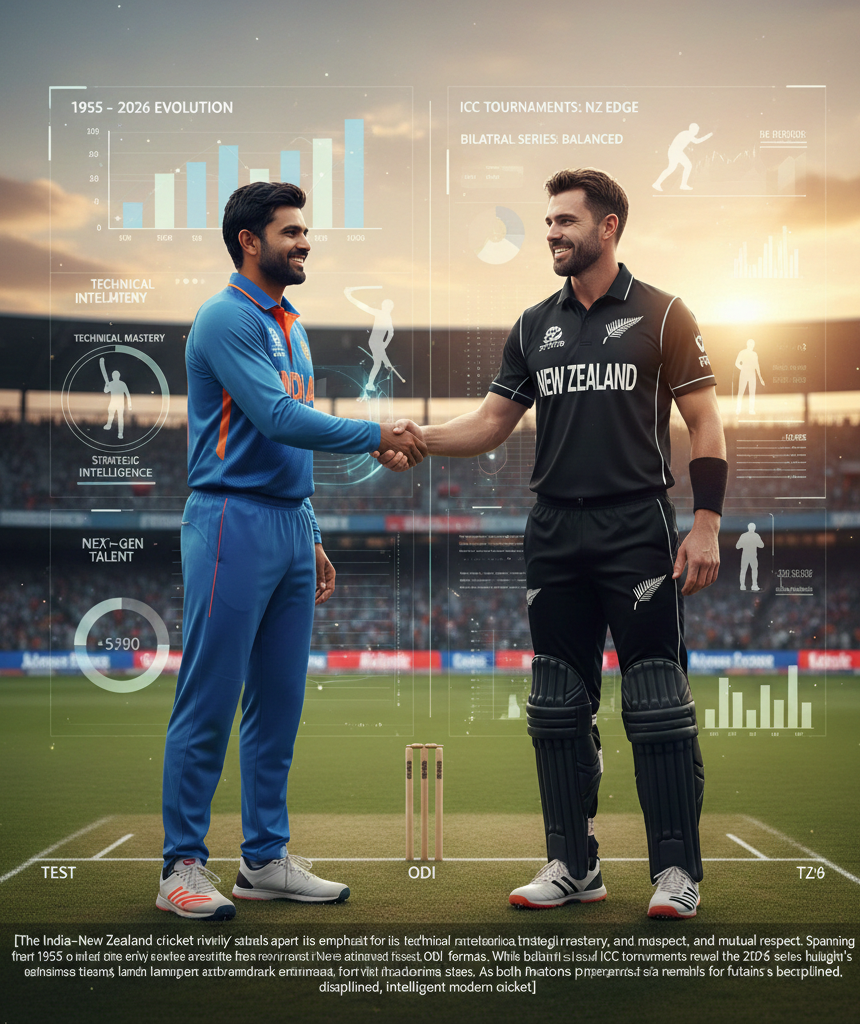
India vs New Zealand Cricket: A Rivalry Built on Respect and Technical Mastery
The cricket pitch has witnessed countless rivalries over the decades, but few possess the quiet intensity and mutual admiration that defines the India-New Zealand relationship. Unlike the fiery confrontations that characterize some international matchups, this rivalry thrives on technical excellence, strategic depth, and a genuine respect that transcends the boundary rope. When these two nations meet, spectators aren’t just watching a contest of runs and wickets—they’re witnessing a masterclass in modern cricket across all three formats: the endurance test of five-day matches, the strategic ballet of One Day Internationals, and the explosive theater of Twenty20 cricket.
The Historical Journey: From Humble Beginnings to Global Stage
The story of India-New Zealand cricket began modestly in 1955, when both nations were still finding their footing in the international arena. Those early Test matches were characterized by defensive play, with batsmen wearing down bowling attacks through patience rather than aggression. India secured their first official victory during this period, establishing a foundation that would support decades of competitive cricket to come.
The landscape shifted dramatically between 1980 and 2010. This era saw the emergence of genuine match-winners on both sides—players who could single-handedly alter the course of a game. India produced legends who could dominate with bat and ball, while New Zealand developed a reputation for producing seam bowlers who could extract movement from the most docile surfaces. The introduction of T20 Internationals during this period added another dimension to the rivalry, bringing a fresh urgency and innovation that would reshape how both teams approached the game.
From 2010 onward, the rivalry entered its modern phase. Tactical evolution became paramount as both nations embraced data analytics, specialized coaching, and format-specific strategies. The co-hosting of major ICC events brought these teams together not just as competitors but as partners in growing the sport globally. This period has been marked by closely contested series, last-over finishes, and matches that have kept fans on both sides glued to their screens until the final ball.
The Science Behind Victory: What Determines Match Outcomes
Cricket enthusiasts often debate what separates winning teams from losing ones, and the India-New Zealand rivalry offers fascinating insights into this question. Pitch dynamics play an outsized role in determining match outcomes. A surface with higher moisture content typically favors seam bowling, allowing the ball to deviate unpredictably off the pitch. Conversely, harder pitches with less grass cover tend to support spinners, as the ball grips the surface and turns sharply. New Zealand’s home conditions generally offer more assistance to pace bowlers, while Indian pitches traditionally favor spin—a reality that both teams must navigate when touring abroad.
Weather interruptions have become increasingly significant in modern cricket. Rain delays don’t just frustrate spectators; they fundamentally alter match dynamics through the Duckworth-Lewis-Stern method, which recalculates target scores based on lost overs. Teams that understand these mathematical adjustments and can mentally reset during interruptions often gain crucial advantages in rain-affected encounters.
Perhaps most importantly, team dynamics—particularly captaincy and squad balance—separate good teams from great ones. A captain who can read match situations, rotate bowlers effectively, and make bold tactical decisions often tips the scales in tight contests. Similarly, teams with balanced strength across batting, bowling, and fielding departments tend to prevail over those overly reliant on individual brilliance.
Numbers Tell the Story: Statistical Head-to-Head Analysis
The statistical record between these nations reveals fascinating patterns. In ODI cricket, the head-to-head standing shows competitive balance, with series victories distributed relatively evenly when accounting for home advantage. Test cricket tells a similar story—both nations have enjoyed periods of dominance, but neither has established lasting superiority.
However, ICC tournaments present a different narrative. India’s record against New Zealand in major ICC events stands at five wins against twelve losses—a statistic that has puzzled analysts and frustrated Indian fans. The “Kiwis” seem to elevate their game on cricket’s biggest stages, consistently performing above expectations when tournament pressure peaks. This trend suggests that New Zealand’s team culture and mental preparation for high-stakes matches deserve closer examination.
Individual milestones add personal drama to the broader rivalry. During the 2026 tour, Virat Kohli reached the remarkable achievement of 28,000 international runs, cementing his status among cricket’s all-time greats. Meanwhile, Rohit Sharma’s tally of 650 career sixes showcased the evolution of modern batting, where boundary-hitting ability has become as valued as traditional shot-making technique.
The 2026 Series: A New Chapter Unfolds
The 2026 bilateral series between India and New Zealand captured everything that makes this rivalry special. Scheduled across multiple venues with three ODIs and five T20Is, the tour provided a comprehensive test of both squads’ depth and adaptability.
The Nagpur T20I became an instant classic, featuring Abhishek Sharma’s world record performance that sent shockwaves through the cricketing world. His explosive innings demonstrated the fearless approach that characterizes India’s new generation of batsmen. On the bowling front, Mitchell Santner’s tactical use of spin variations showcased New Zealand’s ability to adapt their traditionally pace-oriented attack to subcontinent conditions. Santner’s willingness to flight the ball and invite risk while bowling to aggressive batsmen reflected the confidence and strategic sophistication that New Zealand brings to every encounter.
Emerging talents grabbed headlines throughout the series. New Zealand’s Kris Clarke announced himself on the international stage with performances that suggested a bright future, while India welcomed back Ishan Kishan, whose return added depth to their batting lineup. These younger players represented more than just individual talent—they symbolized the ongoing evolution of both squads toward youth-focused, dynamically aggressive cricket.
Looking Forward: The Future of This Storied Rivalry
As both teams prepare for the 2026 T20 World Cup, the bilateral series served as crucial preparation. The matches provided opportunities to test combinations, assess form, and build the mental resilience required for tournament cricket. India will be particularly keen to reverse their historical struggles against New Zealand in ICC events, while the Kiwis will aim to maintain their remarkable tournament record.
The rivalry continues shifting toward a youth-focused, data-driven narrative. Modern cricket demands players who can process information quickly, adapt to changing match situations, and execute skills under extreme pressure. Both India and New Zealand are investing heavily in identifying and developing such players, ensuring this rivalry remains compelling for decades to come. The mutual respect that has always characterized these encounters remains intact, but the intensity and quality continue rising as both nations push the boundaries of what’s possible in modern cricket.
India vs New Zealand Head To Head – Records