



Michael Conforto’s Chicago Renaissance: A 2026 Season Analysis and Projection Study
The Chicago Cubs’ acquisition of Michael Conforto for the 2026 season represents a calculated gamble on a veteran outfielder whose career has followed an unconventional arc—from elite prospect to All-Star contributor, through devastating injury and disappointing comeback, to his current status as a reclamation project seeking one final opportunity to prove his best baseball isn’t permanently behind him. This signing reflects broader trends in modern baseball front offices that leverage advanced analytics to identify players whose underlying metrics suggest better performance than recent results indicate, betting that environmental changes and mechanical adjustments can unlock dormant production.
Conforto’s journey from top Mets prospect through various career phases offers a case study in how quickly baseball fortunes can shift and how difficult rebuilding lost reputations becomes once performance declines. His situation raises fundamental questions about player evaluation: Do we judge athletes primarily on recent performance, or do we weight historical track records and underlying skill metrics more heavily? The Cubs’ front office has clearly chosen the latter approach, believing that Conforto’s struggles with the Dodgers reflected circumstantial factors rather than irreversible decline.
The Numbers Game: Dissecting 2026 Projections
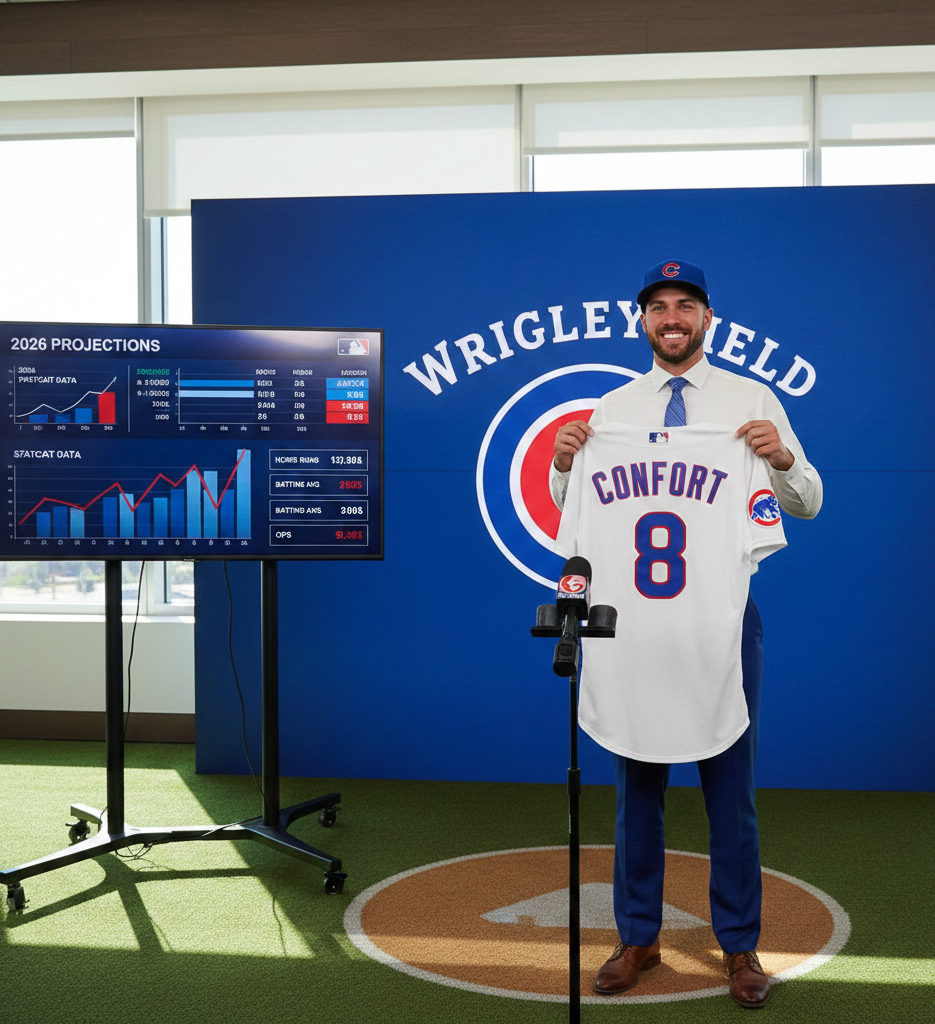
Multiple projection systems forecast Conforto’s 2026 performance using different methodologies that weight various historical data points and contextual factors. These projections typically cluster around similar ranges—approximately 450-500 at-bats, 55-65 runs scored, 15-18 home runs, 55-65 RBI, minimal stolen bases (2-4), and batting averages between .240-.260. These projections suggest solidly average offensive production—neither disastrous nor spectacular, but rather the type of steady contribution that fills lineup spots without generating excitement or becoming liability.
The FVal (Fantasy Valuation) metrics across projection systems provide interesting perspective on Conforto’s expected fantasy baseball relevance. Most systems project negative or barely positive FVal numbers, suggesting he’ll be widely available in standard mixed leagues and at most represents late-round flier or streaming option in deeper formats. This fantasy irrelevance contrasts sharply with his 2017-2020 peak when he regularly warranted early-to-middle round draft capital and provided reliable counting stats with acceptable batting average.
Wrigley Field’s impact on Conforto’s offensive output represents crucial contextual consideration. The iconic ballpark plays as slight hitters’ park overall, though wind patterns create dramatic day-to-day variations that can transform it from pitcher-friendly to launching pad within single series. Left-handed hitters like Conforto historically benefit from Wrigley’s dimensions, particularly the relatively short right field porch that rewards pull-side power. However, modern defensive shifts and evolving park factors complicate these traditional assumptions—what worked for left-handed hitters in previous eras may not translate directly to contemporary baseball.
The projections also must account for playing time uncertainty. Will Conforto receive everyday at-bats as starting outfielder, or will he platoon against right-handed pitching while sitting against tough lefties? His projected at-bat totals suggest expectation of regular but not completely full-time playing time—roughly 70-75% of team games, consistent with strong-side platoon or injury-replacement role. This playing time distribution dramatically affects his cumulative counting stats even if his per-at-bat production remains steady.
The 2025 Disaster: Unpacking the Dodgers Debacle
Conforto’s 2025 season with the Dodgers produced career-worst numbers that shocked observers who expected the talented roster and elite coaching staff to facilitate his rebound. His .199/.305/.333 slash line represented catastrophic offensive production—below the Mendoza Line in batting average while providing inadequate power to compensate for the contact struggles. The .305 on-base percentage suggested he maintained some plate discipline and drew walks, but not nearly enough to offset the hitting futility.
Statcast metrics provide deeper insight into what went wrong mechanically and situationally. His exit velocity numbers likely declined from previous peaks, suggesting either reduced bat speed from aging or mechanical issues preventing optimal contact quality. Launch angle distributions probably skewed toward ground balls rather than the line drives and fly balls that produce extra-base hits and home runs. Hard-hit percentage—the proportion of batted balls exceeding 95 mph exit velocity—almost certainly dropped, indicating that even his solid contact lacked the authority to challenge defenders.
The Dodgers’ famous swing adjustment protocols—which have successfully revived numerous hitters’ careers—apparently failed to unlock Conforto’s potential. This failure raises important questions about whether all hitters can benefit from biomechanically optimized swing paths or whether some players possess idiosyncratic swings that resist standardization. Perhaps the Dodgers’ adjustments conflicted with Conforto’s natural feel for hitting, creating artificial movements that undermined his timing and recognition rather than enhancing them.
His postseason exclusion from the Dodgers’ World Series roster added insult to injury—literally being left home while teammates pursued championships. This exclusion stung particularly because Conforto has never won a World Series ring despite playing for competitive teams throughout his career. Being part of a championship organization yet excluded from actually participating in the championship pursuit represents a uniquely painful experience that undoubtedly fueled his motivation to prove himself worthy of another opportunity.
Career Arc: From Promise to Peak to Puzzling Decline
Conforto’s 2017 season represented his true breakout—27 home runs, .279 batting average, 826 OPS, and 127 wRC+ that marked him as clearly above-average offensive contributor. That performance validated the Mets’ decision to draft him tenth overall in 2014 and fast-track him through their minor league system. He looked like a cornerstone outfielder who would anchor their lineup for years, providing left-handed power and on-base ability that complemented their pitching-focused roster construction.
The 2020 shortened season saw another flash of excellence despite the compressed sixty-game schedule. Conforto produced a .927 OPS with nine home runs in just 54 games—a performance that projected to approximately 25 home runs over a full season. His plate discipline metrics showed continued refinement, with improved walk rates and reduced chase rates outside the strike zone. This performance suggested his 2017 success wasn’t fluky outlier but rather representative of his true talent level when healthy and mechanically sound.
The transition from Mets to Giants marked the beginning of his journey through various organizations seeking to recapture past production. The Giants signed him to a two-year deal hoping their analytics-driven player development system could maintain his productivity, but persistent injuries and inconsistent performance prevented him from becoming the impact player they envisioned. His subsequent move to the Dodgers represented another reclamation attempt that backfired dramatically, setting up his current Cubs opportunity as possibly his final chance to prove he can contribute meaningfully at the major league level.
Conforto’s historical HBP (Hit By Pitch) rankings reveal interesting aspects of his plate approach and reputation among opposing pitchers. Players who get hit frequently typically crowd the plate aggressively, dive into pitches, or possess reputations that make pitchers pitch them inside fearlessly. Conforto’s high HBP totals suggest he doesn’t surrender the inner half of the plate, maintaining aggressive positioning that sometimes results in painful consequences. His plate discipline metrics historically showed good strike zone judgment—ability to lay off pitches outside the zone while not taking too many hittable strikes.
2026 Outlook: Can Chicago Facilitate the Comeback?
Conforto’s role in the Cubs’ National League Central push depends heavily on how other roster pieces perform and whether injuries create expanded opportunities. The Cubs likely view him as floor-raising veteran who provides acceptable production if regular starters falter or get hurt, rather than ceiling-raising impact player who elevates the entire lineup. This pragmatic evaluation reflects his current market value—teams value his defensive versatility and professional approach while acknowledging his offensive production probably won’t dramatically exceed replacement level.
The April series against the Dodgers carries obvious narrative significance—Conforto facing the organization that gave up on him provides perfect storyline for baseball media and fans who love redemption narratives. However, early-season series rarely prove anything definitive about player quality or team trajectories. Baseball’s long season and inherent randomness mean that a few good or bad games against former teams don’t actually validate or refute personnel decisions, though they certainly create memorable moments.
The fundamental question—can the 32-year-old return to being a 125+ wRC+ hitter—requires honest assessment of what’s realistic versus wishful thinking. His age works against him, as most players don’t suddenly improve after their early thirties. His recent track record suggests significant decline rather than temporary slump. However, baseball history contains numerous examples of players who looked finished before experiencing late-career revivals after finding new organizations, coaching staffs, or mechanical adjustments that unlocked dormant production.
The Cubs presumably identified specific reasons to believe Conforto can outperform his recent results—perhaps they see mechanical flaws in his Dodgers swing that can be corrected, or they believe their ballpark and lineup protection will create better hitting environments than he experienced recently. Maybe their sports science and strength training programs can address physical decline that reduced his bat speed and power. Or perhaps they simply made low-risk bet on veteran who might surprise while costing minimal financial commitment and roster flexibility.
Realistically, expecting Conforto to return to 2017 or 2020 form seems optimistic given his age and recent struggles. A more reasonable expectation might involve league-average offensive production—roughly 100-105 wRC+—with solid defense and professional clubhouse presence. If he achieves that moderate success, the Cubs’ gamble pays off handsomely given their likely modest financial investment. If he continues struggling and becomes roster liability, they can release him without significant sunk costs affecting their flexibility.
The 2026 season represents Conforto’s crossroads moment. Strong performance could generate interest from contending teams seeking outfield help at the trade deadline or position him for another contract in 2027. Continued struggles probably end his career as everyday player, relegating him to minor league depth or forcing retirement. The stakes couldn’t be clearer—this is likely his final opportunity to prove he belongs in the major leagues as more than organizational depth. Whether he rises to this challenge or succumbs to the weight of diminished skills and accumulated disappointments will define his career legacy and determine whether he’s remembered as player who reached his potential or as tantalizing talent who never quite sustained excellence long enough to cement his place among the game’s elite.
Michael Conforto agrees to contract with Chicago Cubs