


Hashtags
Los Angeles Lakers 2025-26: Redefining Franchise Identity in the Luka Dončić Era
The Los Angeles Lakers enter their 79th franchise season and 66th year in Los Angeles at a crossroads that few NBA organizations ever navigate successfully—transitioning from one generational superstar to another without enduring prolonged mediocrity. This isn’t merely another chapter in Lakers history; it’s a fundamental reimagining of the franchise’s identity, built around Luka Dončić’s transcendent playmaking rather than LeBron James’ declining but still formidable abilities. Under Mark Walter’s ownership and first-year head coach JJ Redick’s tactical direction, the Lakers are attempting something extraordinarily difficult: remaining competitive during a superstar transition while positioning for sustained excellence once LeBron’s inevitable retirement arrives.
The 2025-26 campaign represents a delicate balancing act between present competitiveness and future planning. The front office has assembled a roster designed to maximize Luka’s prime years while acknowledging that LeBron’s contributions, though valuable, will diminish progressively. This strategic approach requires honest assessment of aging superstars’ capabilities—a challenge that historically championship-oriented franchises like the Lakers often struggle with as loyalty conflicts with cold roster optimization calculations.
The Roster Revolution: Understanding the Anthony Davis Trade
The blockbuster trade that sent Anthony Davis to Dallas in exchange for Luka Dončić will be analyzed for decades as either brilliant foresight or catastrophic miscalculation. The Lakers’ reasoning seemed sound on paper—Davis’s injury history created perpetual uncertainty about his availability, while Dončić represented a younger, more durable franchise cornerstone who could theoretically extend the Lakers’ championship window beyond LeBron’s career. However, trading elite two-way big men for ball-dominant guards always carries risk, particularly when that guard must coexist with another ball-dominant legend.
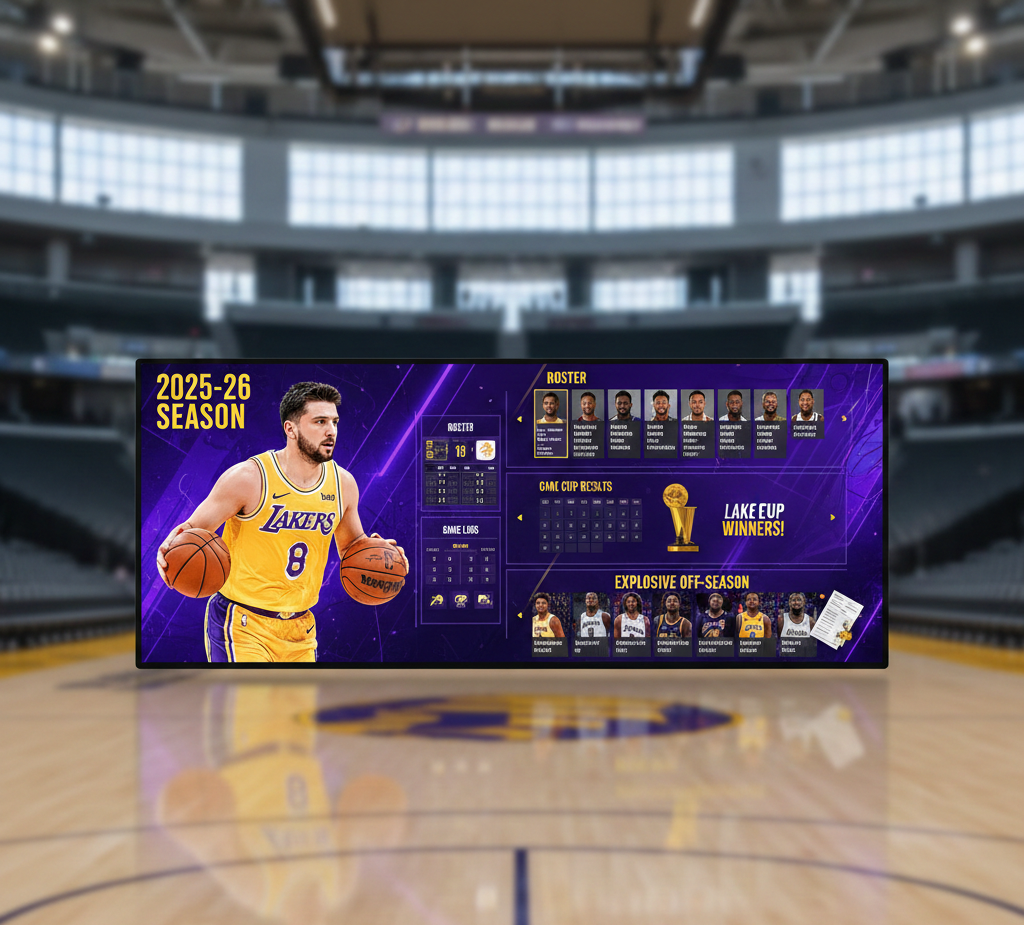
Luka Dončić’s integration into the Lakers’ system has produced predictably spectacular individual statistics—his 32.8 points and 8.6 assists per game represent MVP-caliber production that validates the trade’s ambition. Yet individual brilliance doesn’t automatically translate into team success, particularly when roster construction creates uncomfortable stylistic tensions. Luka and LeBron both thrive with the ball in their hands, orchestrating offenses through their playmaking vision and scoring gravity. Finding offensive balance that maximizes both players while keeping Austin Reaves engaged has proven more challenging than optimistic preseason predictions suggested.
Austin Reaves has emerged as the trade’s unexpected X-factor. His ability to function as secondary playmaker and spot-up shooter allows Luka and LeBron to stagger minutes while maintaining offensive continuity. Reaves’s improved three-point shooting and defensive effort provide exactly the complementary skills that superstar-driven teams require from role players. His relatively modest salary makes him invaluable asset in an era where financial flexibility determines championship roster construction possibilities.
The supporting cast additions of Marcus Smart and Deandre Ayton address specific roster deficiencies created by the Davis trade. Smart provides perimeter defensive intensity and veteran leadership that championship teams require—someone willing to take charges, chase opposing guards through endless screens, and communicate defensive rotations. His offense remains limited, but championship teams can afford offensive-limited role players if they provide elite defensive impact.
Deandre Ayton’s acquisition attempts replacing Davis’s interior presence, though the Arizona product brings dramatically different strengths and weaknesses. Ayton provides rim protection and rebounding that Davis offered, but lacks AD’s perimeter versatility and offensive range. The stylistic differences require tactical adjustments—the Lakers cannot simply insert Ayton into systems designed for Davis and expect equivalent results. His success depends on Redick developing schemes that maximize his strengths while minimizing exposure of his limitations.
Regular Season Performance: Navigating Western Conference Chaos
The Lakers’ current 34-21 record and fifth seed position reflects the Western Conference’s brutal competitive balance where several wins separate playoff certainty from play-in tournament uncertainty. This middle-tier positioning creates strategic dilemmas about load management versus seeding advantages. Do the Lakers rest aging veterans to preserve health for potential playoff runs, accepting lower seeding and potentially more difficult first-round matchups? Or do they push for higher seeds, risking injury accumulation that could prove catastrophic during postseason intensity?
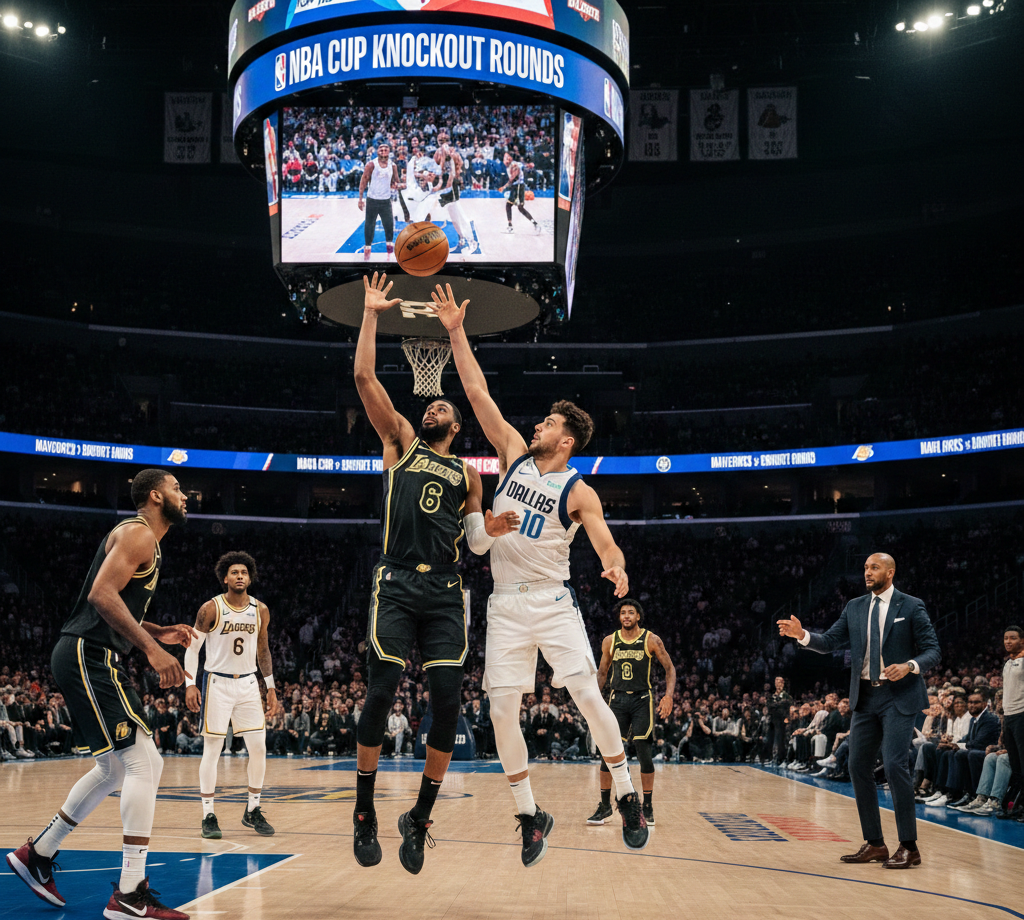
The NBA Cup journey provided early-season validation of the roster’s potential. The undefeated Group B run and advancement to knockout rounds demonstrated that when healthy and focused, this Lakers iteration can compete with any opponent. These tournament games offered valuable experience with high-stakes basketball earlier in the season than typically occurs, allowing Redick to experiment with rotations and late-game strategies in meaningful contexts.
The recent victory over the LA Clippers carries particular significance beyond simple rivalry satisfaction. Defeating crosstown competitors who also feature superstar talent validates the Lakers’ construction and execution under pressure. The win demonstrated offensive balance—multiple players contributing rather than over-reliance on individual heroics—and defensive intensity during crucial possessions. These are precisely the qualities that determine playoff success or failure when margins shrink and every possession carries magnified importance.
However, regular season success proves misleading if it doesn’t translate into playoff performance. The Lakers have stumbled in recent postseasons despite strong regular season records, raising questions about their ability to elevate play when competition intensifies and coaching adjustments become chess matches. Redick’s playoff inexperience as head coach adds uncertainty—does his basketball IQ and preparation compensate for lack of postseason coaching experience, or will veteran opposing coaches exploit his relative inexperience during crucial moments?
Statistical Profile: Elite Offense Meets Vulnerable Defense
Luka Dončić’s individual statistics—32.8 points, 8.6 assists per game—place him squarely in MVP conversations alongside Giannis, Jokić, and Embiid. His usage rate necessarily runs high given his offensive responsibilities, but his efficiency metrics suggest sustainable production rather than empty volume scoring on poor teams. The criticism of Luka has never centered on his offensive brilliance but rather his defensive engagement and tendency toward playoff inconsistency—concerns that Lakers coaching staff must address through tactical schemes and leadership accountability.
The team’s number-one ranking in field goal percentage reflects several factors: Luka’s ability to generate high-quality shot opportunities through penetration and playmaking, LeBron’s continued excellence finishing around the rim despite his age, and role players receiving open looks created by defensive attention drawn by superstars. This shooting efficiency suggests offensive sustainability—the Lakers aren’t relying on unsustainable hot shooting but rather generating mathematically sound shot selection.
Conversely, the league-low rebounding numbers represent glaring weakness that opponents can and will exploit. Rebounding struggles stem partially from personnel—trading Davis for Dončić exchanged elite rebounding for offensive creation—but also reflect scheme decisions and effort levels. Defensive rebounding requires five players committing to blocking out and pursuing balls rather than leaking out for transition opportunities. The Lakers’ rebounding deficiencies suggest either scheme problems where players don’t understand assignments or effort issues where players prioritize offense over defensive fundamentals.
The rebounding weakness creates compounding problems: opponents secure offensive rebounds extending possessions and generating second-chance points, while Lakers’ defensive stands get negated by allowing extra opportunities. Playoff basketball particularly punishes rebounding deficiencies as games slow down and half-court execution determines outcomes. The Lakers cannot afford extending opponent possessions through rebounding failures when facing elite offensive teams in seven-game series.
Tactical Evolution: The Redick System Takes Shape
JJ Redick’s implementation of heavy zone defense represents bold tactical gamble in an era where most teams emphasize switching man-to-man schemes. Zone defenses can effectively protect rim against penetration and limit three-point attempts from specific areas, but they also create offensive rebounding vulnerabilities and can be dissected by patient ball movement and good shooting. Redick’s zone preference likely reflects roster limitations—the Lakers lack perimeter defenders capable of consistently staying in front of elite guards, making zone schemes pragmatic responses to personnel realities rather than purely philosophical choices.
The zone’s success depends on disciplined rotations and communication—precisely the areas where newly assembled rosters typically struggle. Players must understand not just their individual responsibilities but how their actions affect teammates’ positions and responsibilities. This systemic understanding develops through repetition and film study, suggesting the Lakers’ defense might improve as the season progresses and concepts become instinctive rather than conscious.
Injury management, particularly monitoring LeBron James’ knee soreness and migraines, represents crucial yet unglamorous coaching responsibility. LeBron’s forty-plus-year-old body no longer recovers from games like his younger self, requiring strategic rest and load management to preserve health for postseason intensity. The challenge involves balancing rest needs against competitive urgency—every lost game potentially impacts playoff seeding, yet playing through minor injuries risks major breakdowns at inopportune moments.
The Lakers’ medical and performance staff must communicate effectively with coaching staff about James’ status, while Redick must demonstrate willingness to rest superstars despite external pressure for immediate results. Championship teams typically feature coaches confident enough to prioritize long-term health over short-term criticism—a quality Redick must prove he possesses.
Future Trajectory: Strategic Planning Beyond This Season
The projected $51 million in 2026 offseason cap space provides intriguing flexibility for a franchise that has historically leveraged financial advantages to acquire superstar talent. This cap space enables several strategic possibilities: pursuing available max-level free agents, absorbing bad contracts alongside assets in trades, or maintaining flexibility for unexpected opportunities. The Lakers’ decision-making will reveal whether they view themselves as immediate championship contenders requiring one additional piece or longer-term builders constructing around Luka’s prime years.
The available first-round picks in 2026, 2031, and 2033 represent valuable trade assets in an era where draft capital determines acquisition possibilities. These picks could facilitate trades for disgruntled superstars seeking exits from their current situations—players like Giannis Antetokounmpo if Milwaukee’s competitiveness declines. However, using draft capital to chase immediate upgrades sacrifices long-term roster building flexibility, creating risks if acquisitions don’t produce championships.
The potential Giannis pursuit represents exactly the type of franchise-altering move that Lakers ownership has historically pursued. Pairing Giannis with Luka could create a dominant duo reminiscent of Shaq-Kobe partnerships, though the financial and asset costs would be astronomical. The Lakers must evaluate whether Giannis’s timeline aligns with their championship windows and whether his playing style complements Luka’s ball-dominant approach or creates similar tension that plagued the LeBron-Luka fit.
Alternatively, the Lakers might choose retooling around Dončić as singular franchise pillar—surrounding him with complementary pieces rather than pursuing another superstar. This approach prioritizes depth over top-end talent, building rosters where multiple players contribute rather than relying on individual brilliance. This path potentially offers more sustainable success but lacks the star power and marketing appeal that Lakers ownership historically prefers.
The 2025-26 season ultimately represents transition year where the Lakers navigate between past glory and future possibilities. Success isn’t measured purely by championship banners but by positioning the franchise for sustained excellence in the post-LeBron era while remaining competitive in the present. This delicate balance requires honest assessment, bold decision-making, and willingness to endure criticism when short-term results disappoint. The Lakers’ handling of these challenges will determine whether the Luka era becomes another championship dynasty or a cautionary tale about mismanaging generational talent.
Luka Doncic as a Laker: What we’ve seen a year in and …