


Hashtags
Genesis Invitational 2026: Century of Excellence at Riviera Country Club
The manicured fairways of Riviera Country Club prepare to host a milestone moment in professional golf—the 100th edition of what began as the Los Angeles Open in 1926 and has evolved into one of the PGA Tour’s premier Signature Events. This isn’t merely another tournament week; it’s a celebration of American golf history, architectural brilliance, and the enduring appeal of a venue that has tested champions across a full century. As players navigate Riviera’s deceptive slopes and strategic challenges, they’re walking the same grounds where legends from Ben Hogan to Tiger Woods have written their own chapters in this storied event’s remarkable legacy.
The Genesis Invitational occupies a unique position within professional golf’s modern landscape. As a Signature Event carrying elevated status and substantially increased prize money, it attracts the sport’s elite talent while maintaining connections to traditions stretching back to golf’s golden age. The tournament’s centennial celebration provides opportunities to honor the past while showcasing contemporary golf’s extraordinary athleticism and precision—a delicate balance between reverence and relevance that defines successful legacy events.
The Tiger Woods Enigma: Rehabilitation, Return, and Retirement Considerations
Tiger Woods’ status remains professional golf’s most scrutinized storyline, and his relationship with this tournament adds particular intrigue given his role as tournament host through the TGR Foundation. His recent disc replacement surgery represents the latest chapter in ongoing battles with a body that endured decades of explosive swings and accumulated trauma. The rehabilitation process following such procedures typically spans months, with return timelines dependent on individual healing rates and the specific demands patients intend placing on repaired structures.
Woods has been characteristically defiant about his competitive future, emphasizing his commitment to competing “without a cart” on the PGA Tour rather than accepting the accommodations available on the Champions Tour. This stance reflects both pride and competitive spirit—acknowledging that using a cart would fundamentally alter the competition’s nature while simultaneously admitting physical limitations he’s spent years refusing to accept. For Woods, walking eighteen holes represents more than logistics; it’s a statement about maintaining standards even as his body increasingly protests.
Speculation about his potential 2026 Masters return intensifies with each passing week. Augusta National holds special significance for Woods beyond his five green jackets—it’s where he announced himself as golf’s future in 1997 and where he authored perhaps sport’s greatest comeback story in 2019. The course’s undulating terrain presents significant walking challenges, yet its relatively short length by modern standards and forgiving rough potentially accommodate diminished driving distance and accuracy. Woods’ team surely evaluates whether sufficient recovery time exists to arrive at Augusta with realistic competitive chances versus simply making ceremonial appearances that might tarnish his legacy.
The Ryder Cup captaincy decision adds another layer to Woods’ complicated calculations about his golfing future. Leading Team USA in 2027 would provide natural transition from player to elder statesman, offering continued involvement without the physical demands of tournament competition. However, accepting the captaincy might feel like premature acknowledgment that his playing days have concluded—a concession Woods has historically resisted making until absolutely forced by circumstances beyond his control.
Financial Stakes: Unpacking the $20 Million Purse and Tournament Economics
The Genesis Invitational’s $20 million purse reflects the PGA Tour’s strategic response to competitive threats from LIV Golf and changing professional golf economics. The winner’s $4 million share represents life-changing money even for established stars, while providing younger players with financial security that previous generations required years to accumulate. These elevated purses fundamentally alter risk-reward calculations—players can afford more aggressive strategies knowing that even finishing in the top ten produces substantial earnings.
The tournament’s retention of the traditional 36-hole cut distinguishes it from some Signature Events that guarantee all participants weekend rounds. This decision honors golf’s meritocratic traditions while maintaining competitive intensity throughout the field. The cut creates Friday drama as bubble players fight to extend their weeks, generating television-friendly storylines about players battling to survive rather than coasting through guaranteed paychecks.
The 10-shot rule adds fascinating strategic complexity to weekend competition. Players trailing the leader by more than ten strokes after 36 holes are eliminated regardless of their position relative to the standard cut line. This rule prevents situations where players far from contention occupy weekend tee times, instead focusing attention on those with realistic winning chances. For players hovering near this threshold, Friday afternoon calculations become extraordinarily complex—balancing aggressive play to move closer to the lead against conservative strategies ensuring they clear the standard cut line.
Strategic Dissection: Riviera’s Most Defining Holes
Hole 1: The Opening Statement
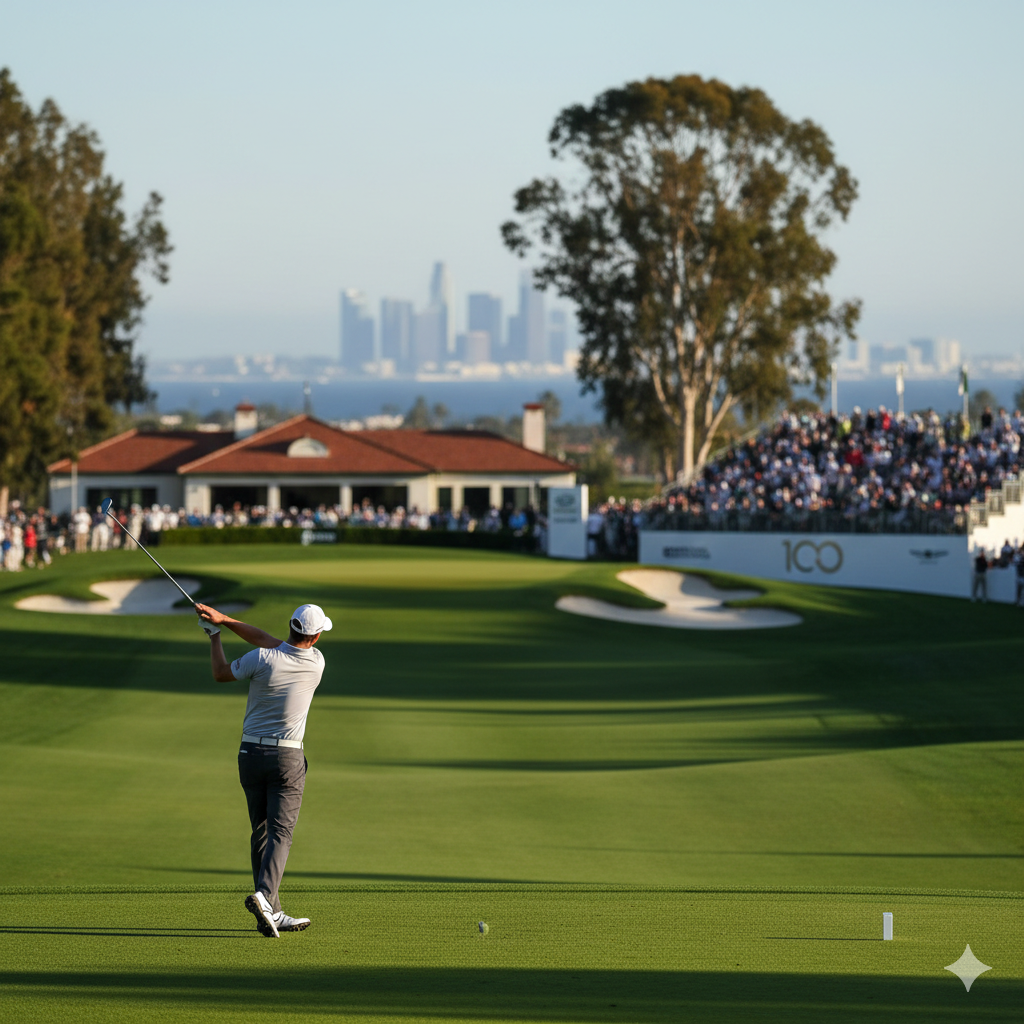
The opening hole’s 75-foot elevated tee shot provides one of golf’s most iconic visual experiences—players and spectators alike can survey the entire hole’s strategic options from this commanding vantage point. Statistically rated as the course’s easiest hole, it nonetheless demands precision rather than power. The elevated tee creates optical illusions about distance and landing areas, causing even experienced professionals to occasionally misjudge club selection. Smart players treat this opener as birdie opportunity rather than given, recognizing that careless execution can produce bogeys that create early psychological deficits.
Hole 10: The World-Famous Risk-Reward Par 4
The 315-yard tenth hole represents strategic golf architecture at its finest. Long hitters can attempt driving the green, but the narrow target punishes misses severely with deep bunkers and problematic angles for recovery shots. Conservative plays to the fairway leave straightforward wedge approaches but surrender birdie opportunities to aggressive competitors. The hole’s strategic complexity intensifies during tournament pressure—Sunday back-nine charges often begin or end based on decisions made standing on this tee.
Course designers worldwide study the tenth hole as a masterclass in creating meaningful strategic choices. The hole works brilliantly because neither aggressive nor conservative strategies guarantee success—execution quality matters more than tactical selection. Weather conditions, tournament situations, and individual player strengths all factor into optimal approaches, ensuring the hole never becomes formulaic or predictable.
Hole 18: The Amphitheater Finish
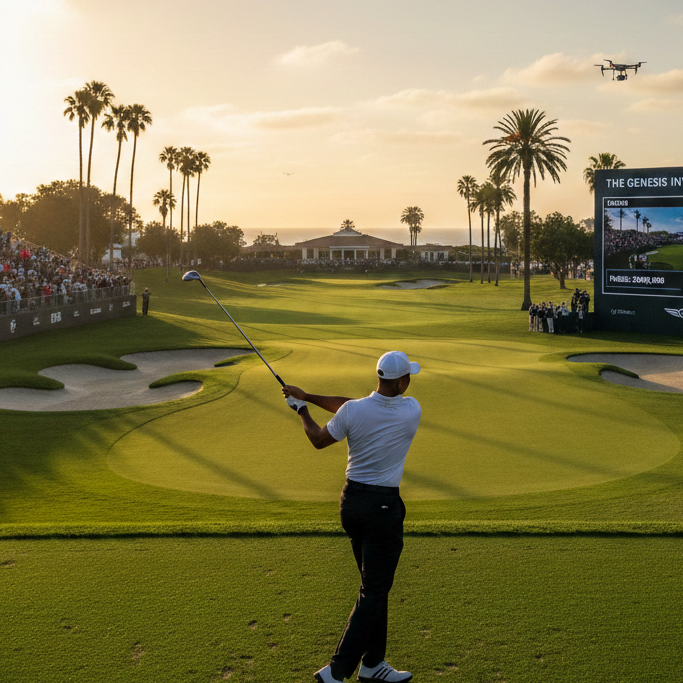
The closing hole’s blind tee shot over the iconic clubhouse creates final-round drama that television broadcasts showcase extensively. The natural amphitheater surrounding the green transforms the 18th into golf’s equivalent of a stadium court, with thousands of spectators creating atmosphere rivaling major championships. Players navigating this hole with tournaments on the line experience pressure few other venues can replicate—the roar of crowds reacting to approaches spinning back toward pins or putts dropping for victories creates moments that define careers.
Historical scoring records, including the 72-hole tournament record of 24-under par, demonstrate how low scores are achievable at Riviera despite its strategic complexity. Modern equipment and improved agronomy have made birdie opportunities more plentiful, yet the course retains defensive capabilities through strategic bunkering and green contours that punish imprecise approaches regardless of how short the approach distances.
Century of History: From Nomadic Origins to Permanent Home
The Los Angeles Open’s nomadic early history saw the tournament move between various Southern California courses before finding its permanent home at Riviera in 1973. This wandering period reflected golf’s developing infrastructure and the economic realities of hosting professional tournaments before television money transformed the sport’s financial landscape. Each venue change brought different challenges and winners, creating diverse history that connected the tournament to multiple communities rather than single geographic identity.
The significance of reaching the 100th anniversary (1926-2026) cannot be overstated in American golf history. Only a handful of PGA Tour events can claim such longevity, with the tournament surviving Depression-era economic hardship, World War II disruptions, and numerous organizational challenges that eliminated other events. This centennial represents institutional success as much as sporting achievement—proof that well-managed tournaments can maintain relevance across generational shifts in how Americans consume sports entertainment.
The Charlie Sifford Memorial Exemption honors the pioneering African American golfer who broke professional golf’s color barrier, ensuring the tournament maintains connections to broader civil rights history beyond purely sporting achievements. This exemption provides playing opportunities for minority golfers while acknowledging that golf’s history includes shameful discrimination that denied talented players opportunities they deserved. The exemption represents small but meaningful progress toward making professional golf genuinely inclusive rather than merely diverse in appearance.
Practical Fan Information: Weather, Broadcasting, and Logistics
Weather forecasts predict 100% chance of rain during Thursday’s opening round, creating potential for delays and the strategic complications that accompany wet conditions. Players must adjust club selections for reduced roll, while course maintenance crews work frantically to keep greens receptive without becoming waterlogged. Fans attending should prepare with appropriate rain gear while recognizing that weather-related delays might disrupt scheduled tee times and celebrity groupings they hoped to follow.
Broadcasting coverage spans ESPN+, GOLF Channel, and CBS, reflecting the tournament’s significance within golf’s media landscape. This multi-platform approach ensures accessibility for cord-cutters preferring streaming services alongside traditional television viewers. Featured group coverage allows fans to follow specific players throughout their rounds rather than network-selected highlights, fundamentally changing how engaged fans consume tournament golf.
On-site logistics require advance planning for smooth experiences. Shuttle services from Santa Monica provide parking relief near the venue, though arriving early prevents missing preferred viewing locations as grounds fill with spectators. The strict 6″x6″x6″ bag size limit reflects security concerns while encouraging fans to travel light rather than hauling excessive gear across hilly terrain. Understanding and preparing for these restrictions prevents gate delays and ensures focus remains on golf rather than logistical frustrations.
As Riviera Country Club welcomes the world’s best players for this centennial celebration, the tournament honors its past while embracing its future—a delicate balance that defines the Genesis Invitational’s enduring appeal within professional golf’s evolving landscape.
2026 Genesis Invitational | Official PGA TOUR Golf …