


Hashtags
Learner Tien: The Cerebral American Breaking Through Tennis’s Elite Barrier
Learner Tien’s emergence as American tennis’s most exciting young prospect in 2025 represents the kind of breakout season that redefines career trajectories and announces genuine championship potential rather than merely promising development that might eventually produce respectable professional careers. The 19-year-old’s ascent from outside the top 150 to the cusp of the top 50 in a single season—rising an extraordinary 94 ranking places through accumulated victories against quality opposition rather than fluky tournament runs against weak fields—demonstrates sustained excellence across diverse conditions, surfaces, and competitive contexts that separates legitimate future stars from hot streaks that regress toward mediocrity once initial momentum dissipates. This rapid rise has captured American tennis fans’ imagination as they search desperately for the next great American champion to emerge from the wilderness years following Pete Sampras and Andre Agassi’s retirements, with Tien’s intelligent, tactically sophisticated game suggesting he might possess the championship ceiling that numerous previous American hopes ultimately lacked.
The defining characteristic of Tien’s game—his cerebral, chess-like approach emphasizing tactical variety, strategic patience, and mental toughness over pure physical dominance—creates both excitement about his championship potential and concerns about whether this style can consistently trouble the absolute elite whose superior athleticism and firepower might overwhelm finesse and tactical intelligence when stakes are highest. The tension between appreciating Tien’s intellectual approach to tennis and worrying that he lacks the raw weaponry to dominate the sport’s biggest stages has created polarized reactions, with supporters arguing his tactical sophistication represents evolution beyond the one-dimensional power tennis that has dominated recent eras, while skeptics dismiss his game as “boring” or “low-ceiling” based on assumptions that championship tennis requires overwhelming opponents through superior firepower rather than outthinking them through superior tactics and execution.
The Arrival of American Tennis’s Next Star
Defining Learner Tien’s Breakout 2025 Season
The 2025 season transformed Learner Tien from promising junior and early-stage professional into legitimate ATP contender through accumulation of results that validated his talent across the full spectrum of professional tennis challenges. The season featured breakthrough victories over top-20 opponents, his first ATP title at the Metz tournament, consistent advancement through qualifying and early rounds at major tournaments, and the kind of week-in, week-out professional competence that separates players building sustainable careers from those who flash briefly before fading into tennis’s crowded middle ranks. This comprehensive excellence across all tournament levels—ATP 250s through Masters 1000s, hard courts through clay—demonstrated versatility and adaptability that many young players lack as they attempt transitions from junior success to professional sustainability.
The breakout season’s timing proved particularly opportune for Tien’s development, as it occurred early enough in his career that he retains substantial runway for continued improvement before reaching physical prime while also arriving late enough that he has accumulated sufficient professional experience to handle the pressure and expectations that breakthrough seasons inevitably create. Players who break out too early sometimes struggle with the sudden expectations and increased opponent preparation that success generates, while those who break through too late may have already established technical and tactical patterns that become difficult to modify even when weaknesses become apparent against elite competition.
The Statistical Milestone: Rising 94 Ranking Places in a Single Year
The 94-place ranking improvement that Tien achieved across the 2025 season represents one of the ATP’s most dramatic single-season ascents, placing him among an elite group of players who have navigated similar rapid rises toward the top of professional tennis. This ranking surge required extraordinary consistency, as the ATP ranking system’s rolling 52-week calculation means that players must not just succeed in one or two tournaments but rather sustain excellence across the entire season to accumulate the points necessary for such dramatic improvement. Every early-round loss represents missed opportunity to gain points, while every deep tournament run provides ranking boosts that separate breakout seasons from merely good years.
The ranking improvement’s magnitude becomes even more impressive when recognizing that rising from outside the top 150 into the top 50 requires different qualities than maintaining rankings once established. Players ranked outside the top 100 must navigate qualifying rounds, face difficult draws as unseeded players, and compete without the prize money or ranking protection that higher-ranked players enjoy when injuries or poor form temporarily derail their results. Successfully navigating these structural disadvantages while accumulating the wins necessary to break into the rankings where direct acceptance into main draws and occasional seeding advantages create self-reinforcing success demonstrates both Tien’s tennis quality and his mental resilience through the grinding professional tennis challenger circuit where many promising talents see their dreams die in anonymous tournaments that casual fans never notice.
The ATP Award Snub: A Statistical Analysis
The Resume: 32 Tour-Level Wins and the Metz Title
Tien’s 2025 resume featuring 32 tour-level victories and the Metz ATP 250 title created what many observers considered compelling case for ATP Newcomer of the Year recognition, as these results demonstrated sustained excellence across the season rather than merely one or two exceptional tournaments that produced misleading impressions of breakthrough. The 32 tour-level wins placed Tien among the season’s most prolific winners in his age cohort, demonstrating ability to win matches consistently across varying conditions against opponents of diverse styles and strengths. This consistency matters enormously for evaluating whether breakout seasons reflect genuine quality or fortunate scheduling and match-ups that won’t prove replicable in subsequent seasons.
The Metz title provided the signature achievement—an ATP tournament victory requiring sustained excellence across an entire week, defeating multiple quality opponents in succession, and handling the pressure of championship matches where mental fortitude often determines outcomes as much as tennis quality. ATP titles separate good professionals who accumulate solid results without ever quite getting over the finish line from champions who can close out tournaments when opportunities arise. Tien’s ability to win Metz at such a young age demonstrated the clutch gene and championship mentality that development cannot teach—either players possess the mental makeup to perform under pressure or they don’t, and Tien’s Metz triumph validated that he possesses championship temperament.
Giant Slaying: Defeating Zverev, Medvedev, and Rublev
The victories over Alexander Zverev, Daniil Medvedev, and Andrey Rublev—all top-10 players and Grand Slam finalists or champions—provided the most tangible evidence that Tien’s breakout reflected genuine elite potential rather than merely solid professional competence. These giant-slaying performances demonstrated that Tien’s game could trouble the absolute best players when conditions aligned favorably and when his tactical intelligence allowed him to exploit opponents’ specific weaknesses rather than attempting to overpower them through superior firepower that he doesn’t possess. The quality of these victories matters enormously for projecting future success, as players who can occasionally defeat elite opponents possess higher ceilings than those who merely defeat lower-ranked players consistently while falling short whenever facing genuine championship-caliber competition.
The specific opponents defeated also provide useful information about Tien’s game and what styles he handles effectively versus those that might expose weaknesses. Defeating Zverev—whose massive serve and powerful baseline game typically overwhelms smaller, less physically imposing opponents—suggests Tien’s return quality and defensive capabilities allow him to neutralize pure power when his tactics and execution meet high standards. The Medvedev victory demonstrated ability to handle one of tennis’s most intelligent, tactically sophisticated defenders, suggesting Tien’s offense possesses sufficient variety and creativity to dismantle even the sport’s best defensive players. The Rublev win showcased capacity to withstand one of tennis’s most aggressive, high-risk baseline approaches, indicating Tien’s consistency and court coverage can frustrate opponents who depend on hitting winners through sheer ball quality.
The Shortlist Discrepancy: Why Fans Believe the ATP “Slipped Through the Net”
The ATP’s decision to exclude Tien from the Newcomer of the Year shortlist generated significant controversy among tennis fans and media who believed his resume obviously merited recognition among the season’s breakthrough performers. The “slipped through the net” characterization reflected perception that ATP officials either overlooked Tien’s achievements through careless evaluation or that subjective biases—potentially favoring more explosive, highlight-reel styles over Tien’s cerebral approach—influenced selections in ways that disadvantaged tactical, intelligent players whose excellence doesn’t translate as effectively into viral social media moments.
The snub’s significance extends beyond mere symbolic recognition to encompass practical marketing and sponsorship implications, as ATP award nominations provide publicity and credibility that young players leverage in endorsement negotiations and media opportunities that can substantially impact earning potential beyond prize money. Being excluded from award shortlists denies players promotional platforms that ATP award ceremonies provide while sending messages to sponsors and media that the player wasn’t among the season’s most notable performers even when objective results suggest otherwise.
The Coaching Evolution: The Michael Chang Era
How the “Legend” Michael Chang Joined the Team Mid-2025
Michael Chang’s addition to Tien’s coaching team mid-season represented one of 2025’s most significant coaching partnerships, bringing together one of American tennis’s legendary champions—the youngest-ever male Grand Slam singles champion, who won the 1989 French Open at age 17—with the teenager many believe represents American men’s tennis’s best championship hope since Andy Roddick. Chang’s decision to coach Tien reflected belief in the young player’s potential and recognition that his own playing style and career trajectory—succeeding through intelligence, consistency, and mental toughness rather than overwhelming physical advantages—aligned perfectly with Tien’s developmental needs and natural game style.
The timing of Chang’s arrival proved particularly opportune, coming at the moment when Tien’s breakout was accelerating and when additional coaching expertise could help consolidate gains while addressing specific technical and tactical weaknesses that might limit future progress. Great coaching partnerships require not just coach expertise but also timing where player and coach connect at the right developmental stage—too early and players may not be ready to absorb advanced concepts, too late and ingrained patterns become difficult to modify. The mid-2025 partnership timing allowed Chang to influence Tien during the critical developmental window where technical refinements can still be integrated smoothly while the player possesses sufficient professional experience to understand why changes matter.
Specific Improvements: Enhancing the Serve’s Effectiveness and Reducing Double Faults
Chang’s coaching impact manifested most clearly through Tien’s serving improvements, particularly the enhanced effectiveness that allowed his serve to become genuine weapon rather than merely serviceable stroke that started points without providing particular advantages. The technical refinements that produced these improvements likely addressed fundamental mechanical issues—weight transfer, racquet path, contact point consistency—that limited Tien’s ability to generate effortless power and placement before Chang’s intervention. Serving represents one of tennis’s most technical strokes, where small mechanical flaws can produce cascading problems that limit pace, spin, placement, and consistency that effective serving requires.
The double fault reduction proved particularly crucial for Tien’s continued development, as excessive double faults create psychological pressure and tactical constraints that undermine confidence and force conservative serving approaches that prevent players from being aggressive with first serves or taking risks that effective serving demands. Players who struggle with double faults often fall into vicious cycles where fear of double faulting makes them tentative, which produces more faults, which intensifies the fear, creating spirals that can devastate serving performance and with it, the entire game foundation that professional tennis requires. Chang’s ability to help Tien break this cycle through technical corrections and mental coaching that restored serving confidence represented breakthrough that may prove more valuable than any other aspect of their partnership.
Adopting a “Vision” from a Former Grand Slam Champion
Beyond specific technical corrections, Chang provided Tien with championship vision—the ability to see pathways toward Grand Slam success that might not be obvious without guidance from someone who has navigated that journey successfully. This vision encompasses everything from tactical templates for defeating specific opponent types, to mental approaches for handling pressure in crucial matches, to strategic career planning around tournament scheduling, training cycles, and the countless decisions that collectively determine whether promising talents achieve their potential or plateau short of championship level.
Chang’s own playing career—built on exceptional speed, defensive consistency, mental toughness, and tactical intelligence rather than overwhelming serve or overpowering groundstrokes—provided template that aligns perfectly with Tien’s natural strengths and development trajectory. By showing Tien how a player without traditional physical advantages can win Grand Slams through superior tactics, preparation, and mental fortitude, Chang provided both inspiration that such pathways exist and practical guidance about how to navigate them successfully.
Playing Style: Brains Over Brawn
Analysis of the “Versatile” and “Tactically-Astute” Playstyle
Tien’s playing style emphasizes versatility and tactical intelligence over one-dimensional power, creating match-ups advantages through variety, consistency, and strategic problem-solving that forces opponents to adjust continuously rather than settling into comfortable rhythms. This approach requires exceptional tennis IQ—the ability to recognize patterns in opponents’ games, identify weaknesses to exploit, and construct points that maximize strengths while minimizing exposure to opponents’ best weapons. The versatility allows Tien to modify tactics mid-match when initial approaches prove ineffective, adjusting game plans on the fly rather than stubbornly persisting with failing strategies.
The tactically-astute label reflects Tien’s understanding of tennis’s strategic dimensions—when to attack versus when to defend, which patterns produce high-percentage opportunities versus which represent low-percentage gambles, and how to manipulate opponents into tactical mistakes through strategic sequencing and disguise. This tactical sophistication typically develops across years of professional competition as players accumulate experience against diverse opponent styles, making Tien’s already-evident tactical maturity at age 19 particularly impressive and suggestive of exceptionally high tennis IQ that cannot be taught but rather represents innate pattern recognition and strategic thinking.
The Weaponization of the Backhand and Precision Drop Shots
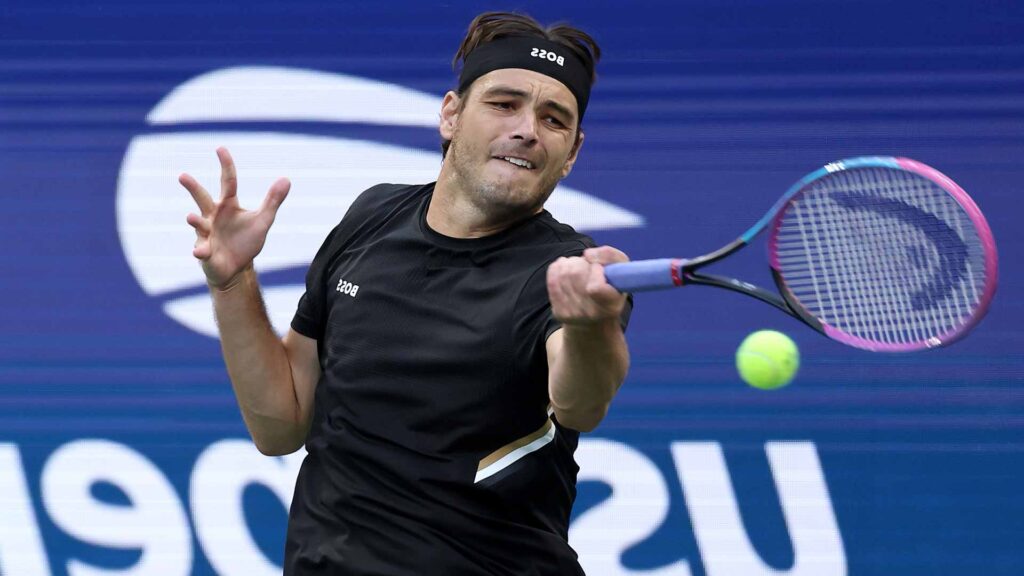
Tien’s backhand has emerged as his primary weapon—the shot that creates offensive opportunities and damages opponents through combination of pace, depth, and directional versatility that prevents opponents from predicting where shots will land. The backhand’s effectiveness stems from technical quality that generates power without sacrificing consistency, allowing Tien to hit aggressively while maintaining the margin for error necessary to avoid the unforced errors that aggressive tactics typically create. This balance between aggression and consistency represents perhaps tennis’s most difficult skill to master, as most players skew too far toward either conservative consistency that lacks the punch to hurt elite opponents or aggressive shotmaking that produces too many errors to sustain winning tennis.
The precision drop shot arsenal that Tien has developed provides crucial tactical variety, preventing opponents from camping on the baseline and giving Tien offensive options even when rallies reach defensive stalemates where neither player can generate winners through baseline power alone. Effective drop shots require exceptional disguise—the ability to make the stroke look identical to normal groundstrokes until the last moment when the ball leaves the racquet with backspin and arc that drops just over the net. This disguise forces opponents to respect drop shot possibilities even when Tien intends normal groundstrokes, creating hesitation that prevents them from standing deep behind the baseline without fearing being wrong-footed by well-executed drops.
Addressing Critics: Moving Beyond the “Low-Ceiling” or “Boring” Labels
The “low-ceiling” criticism directed at Tien reflects skeptics’ beliefs that his game lacks the overwhelming weapons—huge serve, massive forehand, exceptional athleticism—that they associate with championship tennis, suggesting he might achieve solid professional success without ever quite possessing the firepower necessary to consistently defeat the absolute elite at Grand Slams. This criticism often stems from superficial analysis that equates championship potential with obviously dominant physical attributes rather than recognizing that tennis excellence can be achieved through multiple pathways including the tactical intelligence and versatility that Tien demonstrates.
The “boring” label particularly frustrates Tien’s supporters, as it dismisses intelligent, tactically sophisticated tennis in favor of mindless power-hitting that produces spectacular highlights but often proves less effective for actual match-winning. This criticism reveals unfortunate biases where casual observers value aesthetics and entertainment over effectiveness, preferring players who hit thunderous winners even when those players also make catastrophic errors, while dismissing tactically sound players whose consistent excellence produces victories without the viral moments that dominate social media. The reality is that championship tennis requires both shotmaking brilliance and tactical intelligence, and Tien’s development trajectory suggests he’s cultivating both dimensions even if his tactical strengths currently overshadow his power game.
Future Outlook: The 2026 Campaign
Performance at the 2026 Australian Open and Potential Top 10 Trajectory
Tien’s 2026 Australian Open performance will provide crucial early-season evidence about whether his 2025 breakthrough represented sustainable excellence or temporary peak that regression toward more natural levels might undermine. The Australian Open’s timing as the season’s first Grand Slam creates particular pressure for players attempting to validate previous seasons’ success, as poor performances can trigger confidence crises and media narratives about one-hit wonders that become self-fulfilling prophecies even when underlying tennis quality remains strong. Conversely, strong Australian Open results can launch players toward sustained excellence by establishing confidence and ranking points that create self-reinforcing success throughout the season.
The trajectory toward top-10 ranking remains realistic for Tien if he maintains 2025’s form while making incremental improvements that allow him to win even bigger matches and advance deeper at Masters 1000 and Grand Slam events. Reaching the top 10 typically requires combining consistent early-round success that accumulates baseline points with occasional deep tournament runs at the sport’s most prestigious events that provide the massive point hauls necessary to break into rankings’ upper echelon. The mathematical pathway exists for Tien, but executing it requires the kind of sustained excellence across the entire season that most players cannot maintain regardless of their talent levels.
Managing the Mental Game and “Silly Errors” for Elite-Level Consistency
The mental game management and reduction of “silly errors”—unforced mistakes on relatively easy shots that stem from concentration lapses rather than opponent pressure or difficult shot-making circumstances—represent Tien’s most important developmental priorities as he attempts to consolidate his top-50 position and push toward elite rankings. These mental errors become increasingly costly against higher-level opposition who capitalize ruthlessly on any free points that opponent mistakes provide, converting momentary concentration lapses into game-changing breaks of serve that can determine entire matches.
The elite-level consistency that separating top-10 players from those ranked 20-50 requires minimizing these errors through improved focus, better shot selection, and the kind of point-by-point discipline that prevents mental wandering even when matches reach routine moments where concentration naturally drifts. Developing this consistency typically requires years of professional competition where players learn through painful experience that lapses against elite opponents prove catastrophically expensive, gradually internalizing lessons about maintaining intensity across entire matches rather than merely during obviously crucial moments.
The Upcoming Rivalry with Alex Michelsen and Fellow Next-Gen Stars
The emerging rivalry between Tien and fellow American Alex Michelsen creates compelling narrative for American men’s tennis, as these two teenagers potentially represent the future of American tennis and will likely battle for tournament titles, ranking positions, and national team spots across the next decade. This domestic rivalry benefits both players by providing familiar opponent with similar talent levels who serves as constant measuring stick for developmental progress, while also creating media narratives and fan interest that transcend tennis quality to encompass storylines about friendship, competition, and national pride.
Beyond Michelsen, Tien’s peer group includes global next-generation stars like Holger Rune, Carlos Alcaraz, and other players born in the 2000s who will define tennis’s next era as the current generation ages toward retirement. These rivalries will shape tennis’s future landscape, determining which players emerge as dominant champions, which prove merely solid professionals, and which fail to realize their potential despite early promise. Tien’s ultimate legacy will be determined largely by how he fares in these peer comparisons—whether he establishes himself as the best of his generation or merely as one among many talented players who couldn’t quite reach the sport’s absolute pinnacle.
Conclusion: A Trajectory Steeply Upward
Why the 2025 Snub Is a Minor Hurdle in a Career Destined for Grand Slam Success
The ATP Newcomer of the Year snub, while disappointing and arguably unjust, represents minor setback that will prove completely inconsequential if Tien achieves the Grand Slam success that his talent and trajectory suggest is possible. Awards and recognitions matter primarily for the publicity and opportunities they create rather than for any intrinsic value, and Tien’s tennis quality and results will ultimately determine his career success far more than whether ATP officials recognized his 2025 breakthrough appropriately. The snub might even provide useful motivation, creating chip-on-shoulder mentality where Tien channels perceived slights into competitive fury that drives him toward the excellence that will make award selections irrelevant.
The career trajectory toward Grand Slam success requires continuing the developmental progress that defined 2025 while avoiding the injuries, burnout, and loss of motivation that derail many promising careers before they reach their potential peaks. Tien’s intelligent approach to the game, his work ethic, and his coaching team’s quality suggest he possesses the ingredients necessary for sustained excellence, but tennis history includes countless cautionary tales of can’t-miss prospects who missed regardless. The next several seasons will determine whether Tien joins American tennis’s championship pantheon alongside Sampras, Agassi, and other legends, or whether he becomes another footnote in the long list of promising talents whose careers fell short of their early potential. The early evidence suggests the former is more likely than the latter, making Learner Tien one of the most exciting stories in contemporary tennis and potentially American men’s tennis’s salvation after two decades wandering the championship wilderness.
Learner Tien Stats, News, Pictures, Bio, Videos
Learner Tien: Why ‘the sky is the limit’ for the American star