


Hashtags
Alex de Minaur: A Comprehensive Profile of Australia’s Tennis Icon
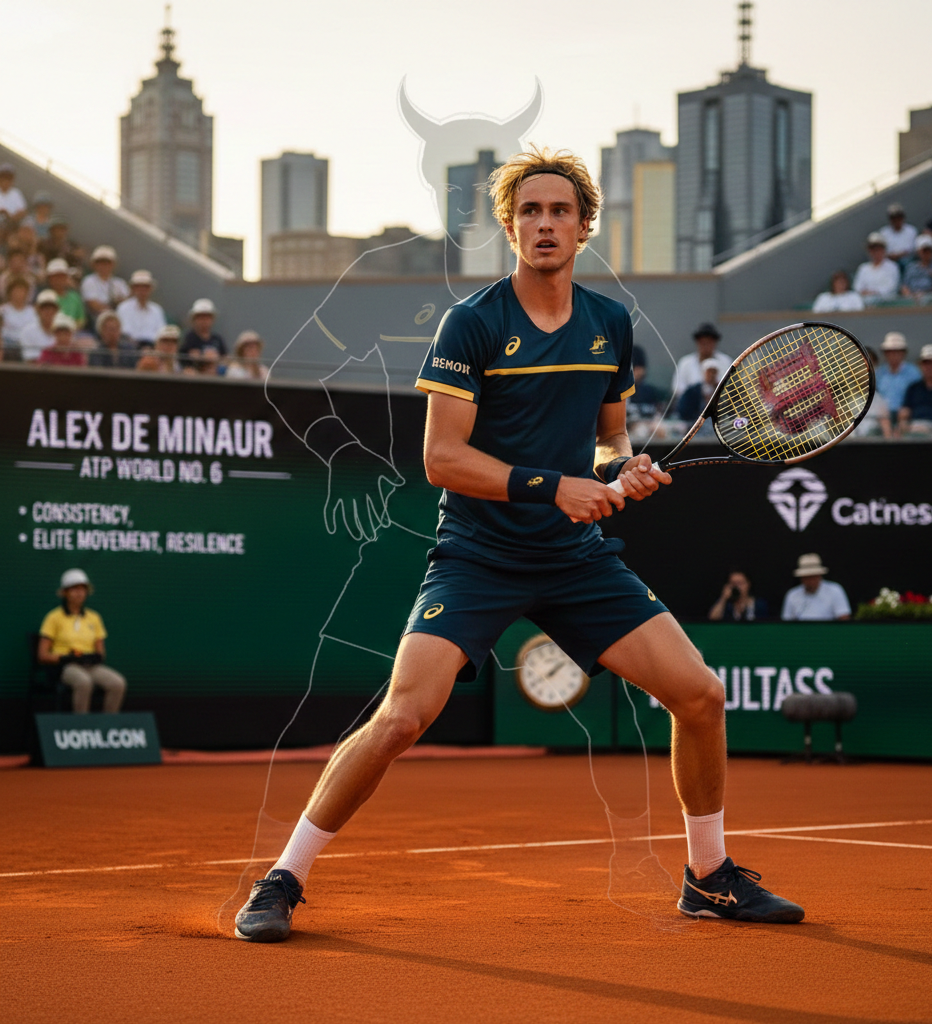
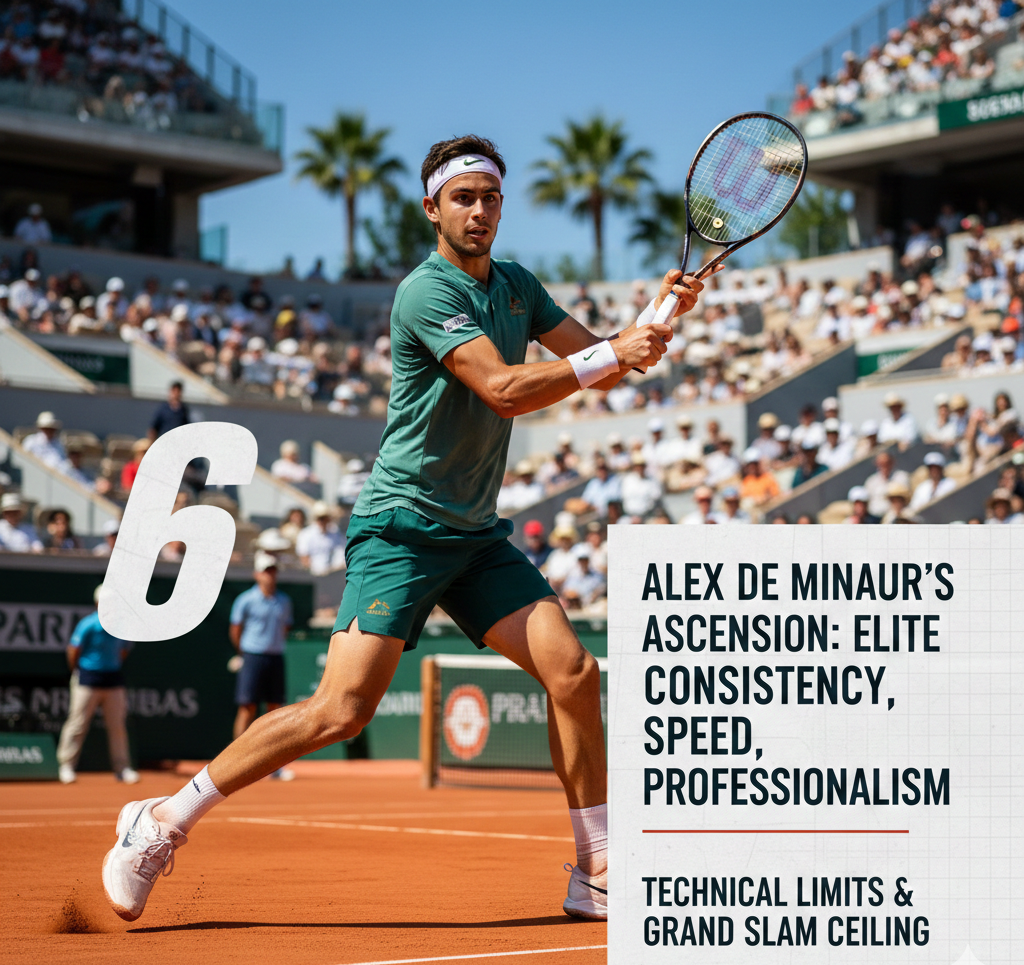
Alex de Minaur occupies a fascinating position in contemporary tennis—simultaneously celebrated as Australia’s undisputed No. 1 and current world No. 6, yet perpetually discussed through frameworks of limitation rather than achievement, with analysis focusing more on what prevents him from reaching the sport’s absolute pinnacle than on the remarkable consistency that has made him one of the world’s elite players. This tension between accomplishment and expectation defines de Minaur’s career narrative, as Australian tennis fans desperate for a Grand Slam champion to succeed Lleyton Hewitt project hopes onto a player whose exceptional movement, competitive intensity, and professional consistency have earned Top 10 status while his technical limitations—particularly his serving mechanics—create a ceiling that has thus far prevented breakthrough performances at major championships.
The “Demon” identity that de Minaur has cultivated captures both his greatest strengths and the perception challenges he faces. The nickname evokes his supernatural speed around the court, his relentless defensive capabilities that frustrate opponents attempting to hit winners past him, and his competitive fire that refuses to concede points even when situations appear hopeless. Yet the moniker also subtly reinforces narratives about limitations—demons are fearsome but ultimately defeatable, threatening but not championship-level dangerous. This framing influences how tennis media, fans, and even fellow players perceive de Minaur, creating expectations that he will perform excellently against lower-ranked opponents while falling short when facing the sport’s absolute elite in the pressure-cooker environments of Grand Slam latter rounds.
Overview of Status as Australia’s No. 1 and Current World No. 6
De Minaur’s position as Australia’s clear No. 1 carries enormous significance in a tennis-obsessed nation where the sport enjoys cultural prominence rivaling any country globally outside perhaps France or Spain. Australia’s tennis heritage includes legendary champions—Rod Laver, Roy Emerson, Evonne Goolagong, Margaret Court, Pat Rafter, and Lleyton Hewitt—whose achievements created expectations that Australia should consistently produce Grand Slam champions rather than merely competitive professionals. The 15-year Grand Slam drought since Hewitt’s last major title in 2002 has intensified hunger for an Australian champion, placing pressure on de Minaur as the nation’s best hope for ending the championship famine.
His current world No. 6 ranking represents career-high territory achieved through sustained excellence across the 2024-2026 seasons where consistency in Masters 1000 events, strong performances in ATP 500 tournaments, and solid Grand Slam results accumulated ranking points that elevated him into tennis’s elite tier. Reaching and maintaining Top 10 status represents genuine achievement—fewer than 200 men have reached Top 10 rankings in the Open Era’s 55-year history, making de Minaur’s presence among tennis’s current elite a remarkable accomplishment regardless of whether he ultimately achieves Grand Slam glory.
The world No. 6 ranking also carries practical significance for Grand Slam seeding, typically ensuring de Minaur avoids facing Top 4 seeds until quarterfinals at major championships. This seeding protection provides realistic paths to latter rounds if he navigates early matches successfully, creating opportunities for deep runs that boost confidence and provide experience in pressure situations that separate good players from champions.
The Significance of the “Demon” Identity in Global Tennis
The “Demon” nickname functions as brand identity that distinguishes de Minaur in the crowded field of professional tennis, providing memorable shorthand for his playing style and personality that casual fans and media can easily grasp and repeat. The moniker originated from his relentless court coverage and defensive abilities that seemed supernatural, with opponents feeling they couldn’t hit winners past someone who retrieved everything while somehow transitioning from defense to offense through exceptional speed and anticipation.
Globally, the Demon identity has transcended mere nickname status to become marketing asset, appearing on merchandise, social media handles, and broadcast graphics that reinforce brand recognition. This personal branding matters enormously in modern professional tennis where player marketing and sponsorship income can exceed prize money for all but the sport’s absolute elite. De Minaur’s Demon identity helps him stand out in sponsor negotiations and fan engagement despite not yet achieving Grand Slam success that typically drives the highest-value endorsements.
However, the nickname also reinforces narratives about de Minaur’s game being primarily defensive, built on speed and retrieval rather than offensive firepower. This framing can become self-fulfilling as opponents, media, and even de Minaur himself internalize expectations that his game succeeds through defense rather than attacking tennis. The challenge involves leveraging the Demon brand’s positive associations—intensity, competitiveness, supernatural abilities—while evolving beyond purely defensive tennis toward the more complete game required to win major championships.
The Formative Years
Family Background (Spanish/Uruguayan) and Dual Citizenship
Alex de Minaur’s multicultural heritage significantly shaped his development, with a Spanish mother and Uruguayan father providing connections to two passionate tennis cultures beyond his Australian upbringing. Born in Sydney but eligible for Spanish citizenship through his mother, de Minaur could have represented Spain internationally—a decision that would have dramatically altered his career trajectory given Spain’s tennis depth and infrastructure compared to Australia’s relatively limited professional player pipeline during his formative years.
The choice to represent Australia reflected both genuine connection to the country where he was raised and strategic calculation that becoming Australia’s No. 1 would provide opportunities and recognition that might be unavailable in Spain where he would compete for attention and resources against Rafael Nadal, Carlos Alcaraz, and numerous other elite Spanish professionals. This decision has proven strategically sound, as de Minaur receives enormous media attention and national team opportunities in Australia that would be difficult to achieve in Spain’s more competitive tennis environment.
His Spanish and Uruguayan heritage influenced his tennis development through exposure to clay court tennis and Latin American playing styles that emphasize defense, baseline consistency, and tactical intelligence over pure power. These influences manifest in de Minaur’s game through his exceptional movement, his comfort in long rallies, and his preference for constructing points tactically rather than attempting to overpower opponents through raw firepower.
Mentorship by Lleyton Hewitt and Early Training at Carss Park
Lleyton Hewitt’s mentorship of de Minaur represents one of Australian tennis’s most significant development relationships, with the former world No. 1 and two-time Grand Slam champion providing guidance, tactical advice, and competitive wisdom that accelerated de Minaur’s progression from promising junior to professional contender. Hewitt recognized qualities in young de Minaur that mirrored his own game—exceptional movement, competitive intensity, and ability to retrieve seemingly impossible balls while frustrating opponents through relentless consistency.
The mentorship extended beyond technical coaching to encompass mental approach, professional conduct, and the intangible championship mentality that Hewitt cultivated during his own career. Hewitt’s guidance helped de Minaur navigate the transition from junior success to professional competition, avoiding pitfalls that derail many promising talents who struggle with the physical, mental, and lifestyle adjustments that professional tennis demands.
Early training at Carss Park in Sydney’s southern suburbs provided foundation for de Minaur’s development, with the facility’s hard courts and coaching staff developing his game’s fundamental technical patterns. The relatively modest training environment—compared to prestigious academies in Spain, France, or the United States—instilled work ethic and appreciation for opportunities that might have been taken for granted in more privileged circumstances. The Carss Park years established values of hard work, humility, and gratitude that have characterized de Minaur’s professional career and public persona.
Career Milestones & Major Achievements
Year-by-Year Highlights: Notable Titles (Acapulco, Atlanta, Sydney) and Grand Slam Quarterfinal Runs
De Minaur’s professional breakthrough occurred gradually through accumulation of ATP titles and consistent Grand Slam performances rather than a single transformative moment. His title victories in Acapulco, Atlanta, and Sydney represent career highlights that demonstrated his ability to win tournaments against quality fields while handling pressure situations in finals against dangerous opponents. The Acapulco title particularly stands out given the tournament’s ATP 500 status and strong field, with the victory proving de Minaur could succeed at tournament levels just below Masters 1000 and Grand Slam events.
The Atlanta title showcased his prowess on hard courts in hot conditions where movement and conditioning provide significant advantages, with de Minaur’s superior fitness allowing him to outlast opponents in brutal summer heat that reduced others to cramping and fatigue. The Sydney title carried special emotional resonance as a hometown victory that validated his status as Australian tennis’s present and future, delivering championship tennis for home fans who had supported his development from junior prominence through professional emergence.
Grand Slam quarterfinal runs represent de Minaur’s most significant major championship achievements to date, with appearances in the latter rounds demonstrating capacity to navigate five-set matches across two weeks of intense competition. However, his inability to advance beyond quarterfinals—losing to elite opponents like Rafael Nadal, Novak Djokovic, and other champions when facing them in best-of-five formats—highlights the gap between being a very good player and a genuine Grand Slam contender. These quarterfinal defeats, while respectable results, reinforce narratives about de Minaur lacking the weapons to trouble absolute elite opponents when matches extend to four or five sets and the better player’s superiority emerges across extended competition.
Historical Victories: First Wins Over Top-5 Players like Medvedev and Nadal, and the World No. 1 Defeat of Djokovic
De Minaur’s career victories over Top 5 opponents represent breakthrough moments that validated his belonging among tennis’s elite while providing confidence that he could compete with the sport’s best players when conditions and circumstances aligned favorably. His first victory over Daniil Medvedev showcased ability to handle Medvedev’s unique style—awkward ball trajectories, defensive consistency, and mental gamesmanship—through superior movement and willingness to engage in extended baseline rallies that ultimately favored de Minaur’s speed and court coverage.
The victory over Rafael Nadal, while coming relatively late in Nadal’s career when the Spanish legend’s physical capabilities had diminished from prime levels, nonetheless represented genuine achievement against one of tennis history’s greatest champions. The win demonstrated that de Minaur’s game could trouble even all-time greats when he executed his tactical gameplan while maintaining the intensity and focus required to defeat a player of Nadal’s competitive mentality and championship experience.
The world No. 1 defeat of Novak Djokovic stands as de Minaur’s signature career victory, proving he could defeat the sport’s most accomplished active player in best-of-three format when playing his best tennis. The victory occurred during a period when Djokovic faced various challenges—potential fatigue, minor injury concerns, or simply an off day—that created opportunity for upset, but de Minaur deserves full credit for executing the gameplan and handling pressure that comes with facing a 24-time Grand Slam champion. The win provides evidence that de Minaur’s ceiling, when playing optimally, allows him to compete with anyone in the sport, even if achieving that peak level consistently enough to win Grand Slams remains elusive.
The 2026 Campaign: Current Form at Melbourne Park and the “Ash Barty Effect” on the National Team
De Minaur’s 2026 Australian Open campaign generated enormous national attention as Australian fans desperately hoped for a home champion to end the 15-year Grand Slam drought. His progress through early rounds demonstrated the solid, professional tennis that characterizes his game—comfortable victories over lower-ranked opponents, efficient match management that conserved energy for latter rounds, and the consistency that has defined his Top 10 career. The Melbourne Park crowds provided enthusiastic support that created genuine home-court advantage, with raucous atmosphere reminiscent of the Lleyton Hewitt era when Australian fans generated intimidating noise that unsettled opponents unaccustomed to such passionate, partisan support.
The “Ash Barty effect” referenced in national team contexts describes how Barty’s 2022 Australian Open victory demonstrated that Australian champions could emerge when given proper support, development, and belief. Barty’s retirement at age 25 while world No. 1 created both inspiration—proving Australian tennis could produce champions—and renewed hunger for another Australian to reach Grand Slam glory. De Minaur benefits from this cultural moment where Australian tennis infrastructure, media attention, and public support align to provide optimal conditions for championship breakthroughs, even as the pressure of expectations creates additional mental challenges that can undermine performance in crucial moments.
Deep Dive: Playing Style and Tactical Challenges
The “Speed Demon” Advantage: Agility, Footwork, and Artistic Movement
De Minaur’s movement represents his most elite attribute, with court coverage and footwork ranking among the best in professional tennis. His acceleration from standstill to full sprint occurs nearly instantaneously, allowing him to reach balls that opponents assume are winners only to watch de Minaur track them down and return them with interest. This defensive capability frustrates opponents whose attacking shots should produce points but instead merely begin rallies where de Minaur’s superior movement creates tactical advantages.
The agility extends beyond straight-line speed to encompass change of direction, recovery steps after wide shots, and balance that allows quality ball-striking even when stretched into defensive positions. These movement qualities create compounding advantages—opponents must hit closer to lines to generate unreturnable shots, increasing their error rates while de Minaur’s defensive consistency applies psychological pressure that forces opposition into progressively riskier shot-making that often backfires.
The artistic quality of de Minaur’s movement manifests in seemingly effortless gliding across courts, with fluid weight transfer and economical steps that cover maximum ground with minimum wasted energy. This movement efficiency allows him to maintain speed and explosiveness deep into five-set matches where less efficient movers succumb to fatigue and cramping. The beauty of his movement has generated highlight reels and fan appreciation that transcends technical analysis, creating aesthetic appeal that attracts casual fans who might not fully understand tactical nuances but recognize and appreciate exceptional athletic ability.
Critical Technical Flaws: Detailed Look at the “Muscular” Serving Style, Lack of Weight Transfer, and Rhythm Disruptions
De Minaur’s serving represents his most significant technical limitation, with mechanics that generate insufficient pace and placement to trouble elite returners who can attack second serves and neutralize first serves that lack the velocity or spin variation to keep opponents defensive. The “muscular” serving style described by technique analysts refers to de Minaur’s reliance on upper body rotation and arm strength rather than utilizing full kinetic chain from legs through core into shoulder rotation that elite servers employ to generate effortless power.
The lack of proper weight transfer from back foot to front foot during the service motion robs de Minaur of the ground force generation that produces elite serving velocity. Watch elite servers like John Isner or Nick Kyrgios and you’ll see explosive upward and forward weight transfer that rockets their bodies into the court while racquet head speed generates effortless power. De Minaur’s more static lower body prevents him from accessing these power sources, leaving him dependent on less efficient upper body mechanics that produce serves lacking the pace to create free points or the spin variation to consistently set up weak returns that he can attack.
Rhythm disruptions in de Minaur’s service motion—hesitations and adjustments between ball toss and racquet acceleration—further compromise consistency and power generation. Elite serving requires smooth, rhythmic motion where each component flows seamlessly into the next without pause or adjustment. De Minaur’s occasional rhythm breaks introduce timing variability that produces double faults at crucial moments while preventing the unconscious automaticity that allows elite servers to deliver under maximum pressure without conscious mechanical thoughts interfering with execution.
These serving limitations create cascading tactical problems—de Minaur must play longer baseline rallies because he cannot generate free points through unreturnable serves, his second serves face aggressive returns that put him immediately defensive, and crucial game situations become exponentially more difficult when he cannot rely on serving to escape pressure. Against elite players who serve well themselves, this asymmetry becomes decisive as opponents hold serve comfortably while de Minaur must grind through difficult service games where every point requires winning through rallies rather than leveraging serving advantages.
The Top 10 Barrier: Analyzing the Perspective of Fans and Critics Regarding His Status as a “Gatekeeper”
The “gatekeeper” label applied to de Minaur by some tennis observers captures the perception that he consistently defeats lower-ranked players while falling short against the sport’s absolute elite, functioning as the barrier separating Top 20 players from Top 10 status rather than as a genuine threat to win major championships. This characterization frustrates de Minaur’s supporters who argue it unfairly diminishes his achievements while accurately identifying the pattern where his victories tend to come against opponents ranked 10-50 while his losses disproportionately occur against Top 5 players, particularly in Grand Slam settings where best-of-five formats amplify the gap between very good players and champions.
Statistical analysis supports the gatekeeper characterization to some extent—de Minaur’s winning percentage against Top 5 opponents hovers around 30-35%, respectable but insufficient for a player harboring Grand Slam championship ambitions. In contrast, his winning percentage against opponents ranked 10-30 exceeds 65%, demonstrating clear superiority over this cohort. This performance distribution creates the pattern where de Minaur reliably reaches Grand Slam quarterfinals by defeating lower-ranked opponents but then loses to elite players whose superior serving, bigger groundstrokes, or more complete games prove decisive over five sets.
The gatekeeper label also reflects tennis community perceptions that de Minaur lacks the “weapons”—dominant serve, massive forehand, exceptional volleys—that elite players use to impose their games and control match rhythms. De Minaur’s game succeeds through consistency, movement, and tactical intelligence rather than through shots that opponents cannot handle regardless of their own level. This creates vulnerability against elite players who don’t make enough errors for de Minaur to exploit and who possess the firepower to eventually break down even exceptional defense through sheer quality of their offensive capabilities.
Impact and Mentorship
Foundation Values: Courage, Professionalism, and Respect
De Minaur’s off-court impact through his foundation work emphasizes values of courage, professionalism, and respect that reflect both his personal character and the lessons learned from his own development journey. The courage value acknowledges that pursuing professional tennis requires enormous bravery—facing the possibility of failure, injury, and the intense pressure of individual competition where there are no teammates to share blame or credit. By emphasizing courage, de Minaur validates the legitimate fears and anxieties that young players experience while encouraging them to pursue their tennis dreams despite these understandable concerns.
The professionalism value teaches young players that talent alone proves insufficient for professional success, requiring dedication to training, attention to nutrition and conditioning, proper rest and recovery, and the countless unsexy details that separate players who reach their potential from those who squander opportunities through poor professionalism. De Minaur’s own reputation for exceptional professionalism—punctuality, media cooperation, respectful interactions with tournament staff and volunteers—provides concrete modeling of these values rather than mere abstract preaching.
The respect value encompasses respect for opponents, officials, fans, and the sport itself, teaching young players that tennis success should be achieved within frameworks of sportsmanship and integrity rather than through gamesmanship, tanking, or behavior that diminishes the sport. De Minaur’s clean disciplinary record and reputation for gracious defeat and humble victory demonstrates these values in action, providing examples that young players can emulate as they navigate their own competitive careers.
The Scholarship Program: Providing 12 Months of Mentorship and European Tours to Junior Talents
De Minaur’s scholarship program provides selected junior talents including Ayumi Ito and Novak Palombo with 12 months of comprehensive mentorship and European tournament tours that accelerate their development while providing experiences and opportunities that might otherwise be financially or logistically inaccessible. The European tour component proves particularly valuable, as competing in European junior tournaments provides essential experience against international competition, exposure to different court surfaces and playing styles, and the independence and maturity that comes from traveling internationally and managing the countless logistical challenges of professional tennis life.
The mentorship extends beyond tennis technique to encompass mental skills, physical training, nutrition, injury prevention, and the lifestyle management that determines whether talented juniors successfully transition to professional careers. Many promising juniors fail not because they lack tennis ability but because they struggle with the mental pressures, physical demands, or lifestyle discipline that professional tennis requires. De Minaur’s mentorship addresses these holistic development needs rather than focusing narrowly on stroke mechanics, preparing scholarship recipients for the comprehensive challenges of professional tennis rather than just improving their forehands or serves.
The program’s focus on providing opportunities to talents like Ito and Palombo who might lack the financial resources or industry connections to access elite development pathways reflects de Minaur’s awareness that Australian tennis talent is distributed across all socioeconomic backgrounds but that opportunity is not. By providing scholarships rather than only working with already-privileged players who can afford elite coaching and international travel, de Minaur helps ensure that Australian tennis identifies and develops all potential champions regardless of their family financial circumstances.
Conclusion: The Future Outlook for de Minaur’s Game and His Enduring Contribution to Australian Sports Culture
The future trajectory of Alex de Minaur’s career hinges largely on whether he can make technical improvements—particularly to his serve—that would allow him to compete more effectively against elite opponents in Grand Slam latter rounds. At age 25, he theoretically has years remaining in his competitive prime, with male tennis players often maintaining Top 10 level into their early thirties if they avoid serious injuries and continue professional development. However, the window for making significant technical changes narrows as players age and their established patterns become increasingly ingrained, making dramatic improvement less likely even as accumulated experience provides incremental advantages.
The realistic assessment suggests de Minaur will likely remain a Top 10 player capable of winning ATP 500 and potentially Masters 1000 titles while continuing to reach Grand Slam quarterfinals and occasional semifinals. Whether he can make the leap to Grand Slam finals and potential championships depends on some combination of technical improvement, tactical evolution, mental breakthrough, and favorable draw circumstances aligning at the right moment. The odds remain long—very few players reach world No. 6 without winning Grand Slams and then subsequently achieve major championship breakthrough—but tennis history includes enough examples of late bloomers and unexpected champions that dismissing de Minaur’s chances would be premature.
Regardless of whether he ultimately wins Grand Slams, de Minaur’s enduring contribution to Australian sports culture seems assured through his professionalism, his development work with junior players, and his role as Australian tennis’s flag-bearer during a challenging transitional period between the Hewitt era and whatever comes next. He has maintained Australia’s presence in tennis’s elite tier while conducting himself with dignity and class that makes him a worthy ambassador for Australian tennis and sport more broadly. For a nation that has produced numerous Grand Slam champions and expects tennis excellence, de Minaur represents both the frustration of near-greatness that falls slightly short and the appreciation for a player who has maximized his abilities while remaining humble, hardworking, and committed to developing the next generation. That legacy, while perhaps not the Grand Slam glory that he and Australia’s tennis fans desperately want, nonetheless represents genuine achievement worthy of respect and appreciation.
Who is Alex de Minaur, the Spain-based speed demon and …