


Hashtags
The Economics of NFL Broadcasting: How America’s Favorite Sport Became Television’s Most Valuable Property
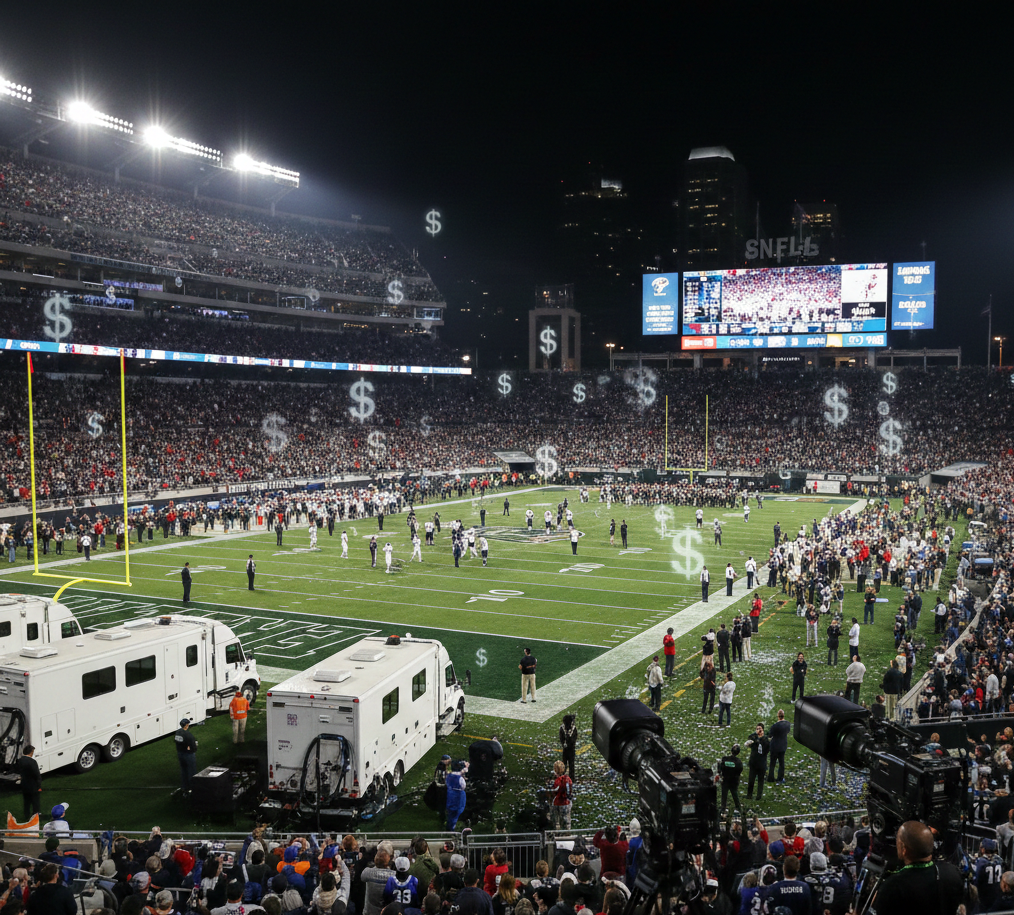
The National Football League occupies a unique position in American media economics, functioning as the single most valuable content property in television history while simultaneously shaping how broadcast networks, streaming platforms, and advertisers structure their entire business models around securing access to its games. This dominance didn’t emerge by accident—it reflects decades of strategic decisions about broadcast rights packaging, revenue distribution, and competitive balance that transformed professional football from regional entertainment into a national obsession commanding unprecedented media spending. Understanding NFL media economics requires looking beyond simple supply and demand to examine the complex multilateral relationships connecting leagues, teams, broadcasters, advertisers, and audiences in ways that create value far exceeding what any single participant could generate independently.
The numbers tell part of the story: broadcasting contracts worth over $110 billion across multiple networks, Super Bowl advertising slots selling for $7 million per 30-second spot, and Sunday afternoon programming that regularly attracts 15-20 million viewers when most television content struggles to reach one million. But these figures only capture the surface dynamics. The deeper economic story involves how the NFL exploited the unique characteristics of sports broadcasting—live viewing that resists time-shifting, passionate fan engagement that tolerates advertising, and exclusive content that cannot be replicated—to extract maximum value from media companies desperate for the increasingly rare commodity of guaranteed mass audiences in an era of fragmented viewership.
Introduction to NFL Media Economics
The NFL’s media economics operate through a sophisticated multilateral relationship where the league, broadcast networks, advertisers, and viewers each play distinct but interdependent roles that create extraordinary value through their interactions. The league controls access to the content that millions of passionate fans desperately want to watch, giving it monopoly power over programming that networks cannot obtain elsewhere. Broadcasters serve as intermediaries who pay the NFL billions for exclusive rights while simultaneously selling access to the audiences those games attract to advertisers who value NFL viewers’ demographics, engagement levels, and receptivity to commercial messages.
This structure positions NFL content at the absolute pinnacle of the $72.8 billion U.S. television broadcasting industry, representing the most valuable programming category by virtually any metric—total viewership, advertiser willingness to pay, and network profitability from securing broadcast rights. The league’s games consistently dominate annual lists of most-watched television broadcasts, with NFL matchups routinely occupying 75 of the top 100 most-viewed programs each year. This audience delivery reliability makes NFL rights essential for broadcast networks whose entire business models increasingly depend on live sports as the last refuge from cord-cutting and streaming fragmentation destroying traditional television economics.
The economic significance extends beyond direct broadcasting revenue to encompass the strategic value of NFL content for network promotion, affiliate fee negotiations with cable and satellite distributors, and competitive positioning against rival networks. A network holding NFL rights can promote its other programming to guaranteed massive audiences every week throughout the fall and winter, cross-promoting new shows, special events, and franchise programming to viewers who might never otherwise encounter these promotions. This promotional value alone justifies substantial rights fees even before accounting for direct advertising revenue or the prestige associated with broadcasting America’s most popular sport.
The Mechanics of Two-Sided Markets
NFL broadcasting operates as a classic two-sided market where networks simultaneously serve two distinct customer groups—viewers who want to watch games and advertisers who want to reach those viewers—with each group’s participation making the platform more valuable to the other group. This two-sided structure creates network effects that amplify the NFL’s value beyond what simple content licensing would generate, as larger audiences attract more advertisers willing to pay premium rates, which in turn provides networks more revenue to bid aggressively for exclusive rights that guarantee those large audiences.
Viewer demand for NFL content exhibits unique characteristics that make it extraordinarily valuable to broadcasters and advertisers alike. Unlike scripted entertainment that viewers increasingly watch on their own schedules through DVRs and streaming services—fast-forwarding through commercials and eliminating advertising effectiveness—NFL games are consumed live by passionate fans who accept commercial interruptions as the inevitable cost of accessing content they desperately want to experience in real-time. Research demonstrates that viewers watching live sports programming are significantly less likely to switch channels during commercial breaks compared to viewers of other programming categories, making NFL advertising inventory far more valuable per viewer than equivalent audience sizes watching scripted content.
This advertising tolerance doesn’t mean viewers enjoy commercials—economic models describe advertising as a “nuisance” that viewers rationally accept when switching costs (missing game action) exceed the disutility of watching advertisements. But this nuisance acceptance proves extraordinarily valuable to advertisers, who estimate their willingness to pay approximately $0.04 per viewer for NFL advertising inventory—a premium reflecting both audience size and the superior engagement and brand recall that sports advertising generates compared to other programming categories. The combination of massive audiences and premium per-viewer advertising rates creates total advertising revenue that justifies the billions networks pay the NFL for broadcast rights.
Network bargaining power in negotiations with the NFL reflects both competitive dynamics among broadcasters and strategic considerations about exclusive rights packages. Fox, CBS, and NBC compete aggressively for NFL rights because losing access would devastate their fall programming strategies and competitive positions against rivals who secured the rights instead. This competition allows the NFL to extract maximum value by playing networks against each other, with each broadcaster terrified of being the network that loses NFL content to a competitor. The league structures rights packages strategically—separating AFC and NFC games, creating distinct Sunday afternoon, Sunday night, and Monday night packages—to maximize competition while ensuring every major broadcast network remains invested in the NFL’s success through some rights ownership.
Analysis of Broadcasting Contracts and Revenue
The current NFL broadcasting contracts represent the richest media rights deals in sports history, with combined annual values exceeding $110 billion across the contract periods. ESPN’s Monday Night Football package commands approximately $2.7 billion annually, reflecting both the premium value of exclusive primetime programming and ESPN’s strategic need for NFL content to justify the high affiliate fees it charges cable and satellite distributors. Fox’s NFC package costs approximately $2.2 billion annually, giving the network exclusive rights to NFC afternoon games plus rotating access to playoff matchups and periodic Super Bowl hosting rights.
CBS pays roughly $2.1 billion annually for AFC game rights, maintaining a relationship with the conference that dates back decades and provides the network crucial fall programming anchoring its entire Sunday schedule. NBC’s Sunday Night Football package, widely considered the most valuable weekly programming in all of television, costs approximately $2 billion annually but delivers consistent ratings dominance and advertising revenue that makes the investment economically rational despite the staggering cost.
These massive rights fees flow into the NFL’s revenue sharing system, where broadcasting income is distributed equally among all 32 teams regardless of individual team popularity, market size, or on-field success. This revenue sharing represents one of professional sports’ most successful implementations of socialist economic principles within a capitalist framework, ensuring that small-market teams in cities like Green Bay and Buffalo receive the same broadcasting revenue as large-market franchises in New York and Los Angeles. The resulting financial parity allows small-market teams to compete for talent and invest in competitive rosters rather than operating as permanent farm systems for wealthy franchises, creating the competitive balance that makes NFL games compelling and unpredictable.
Revenue sharing’s strategic brilliance lies in recognizing that the NFL’s collective value exceeds the sum of individual team values—a league where every game features competitive teams with realistic championship hopes generates more total viewer interest and broadcasting revenue than a league where a few superteams dominate while smaller franchises accept permanent mediocrity. By distributing broadcasting revenue equally, the league ensures all teams can invest in quality while maintaining the competitive uncertainty that makes individual games worth watching and championship races genuinely unpredictable.
Counterfactual: Breaking Up the NFL’s Bargaining Cartel
Economic analysis of alternative rights structures raises fascinating questions about whether the NFL’s centralized bargaining maximizes total value or whether decentralized negotiation might generate superior outcomes under certain circumstances. Simulating a scenario where individual divisions negotiate their own broadcasting rights rather than the league controlling all rights centrally reveals interesting tradeoffs between customization value and bargaining power.
The potential “flexibility” benefit from decentralized bargaining stems from allowing networks to purchase specifically tailored game bundles matching their strategic priorities rather than accepting predetermined packages covering entire conferences. A network with particular strength in certain geographic markets might pay premium rates for division packages featuring teams from those regions, generating customized value that centralized packages cannot capture. Similarly, networks could construct packages emphasizing particular rivalry matchups, competitive divisions with playoff implications, or teams with star players who drive exceptional viewership.
However, simulation results suggest that most divisions would likely receive lower rights fees under decentralized bargaining despite this customization potential. High-value divisions like the NFC North—featuring large-market teams (Chicago Bears), historic franchises (Green Bay Packers), and recent competitive success (Minnesota Vikings, Detroit Lions)—might command premium prices from networks competing specifically for that attractive content. But divisions lacking these characteristics, particularly the NFC South with its smaller markets and recent competitive struggles, would likely see substantial revenue decreases as networks refuse to pay premium rates for less attractive content.
The winners-and-losers dynamic created by decentralized bargaining would fundamentally undermine the competitive parity that makes NFL content valuable in the first place. Without equal revenue sharing, wealthy divisions would accumulate resources allowing them to sign superior talent, creating performance divergence that makes interdivisional matchups increasingly predictable and less interesting to viewers. Over time, this would erode the total value of NFL broadcasting rights as competitive imbalance destroyed the uncertainty that makes games compelling, ultimately harming even the initially advantaged divisions as the overall product deteriorated.
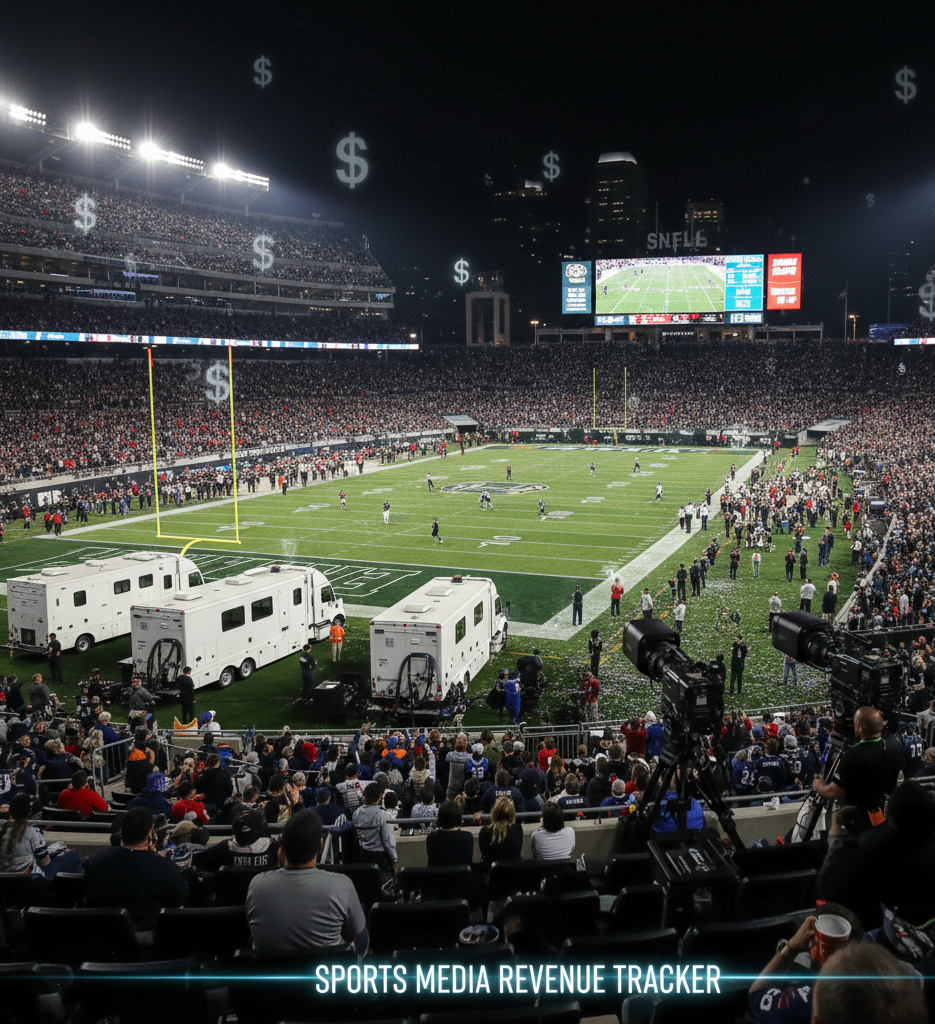
This analysis demonstrates why the NFL’s centralized bargaining represents economically rational cartelization rather than inefficient market restriction—by bargaining collectively and sharing revenue, teams create more total value than they could capture through individualized negotiations. The league’s broadcasting success reflects understanding that cooperation on rights sales and revenue distribution allows competition on the field to flourish, creating the compelling product that justifies those enormous broadcasting contracts.
The Future of Viewing: 2025–2026 and Beyond
The NFL’s broadcasting landscape continues evolving beyond traditional linear television toward streaming integration that reflects changing viewer consumption patterns while maintaining the exclusivity and premium pricing that characterize current contracts. Amazon Prime’s Thursday Night Football package represents the league’s most significant streaming commitment, with Amazon paying approximately $1 billion annually for exclusive digital rights to Thursday games. This partnership allows Amazon to leverage NFL content to drive Prime subscriptions while giving the NFL exposure to younger, digitally native audiences who increasingly consume all content through streaming platforms.
Netflix’s Christmas Day package introduces another streaming giant into NFL broadcasting, with the platform securing rights to multiple Christmas games in a move that demonstrates both Netflix’s ambition to expand beyond on-demand entertainment into live sports and the NFL’s willingness to experiment with non-traditional distribution partners. These Christmas matchups will test whether Netflix’s massive subscriber base translates into NFL viewership and whether the platform’s recommendation algorithms and interface design can successfully present live sports—a fundamentally different product than the binge-worthy series Netflix built its business around.
Super Bowl LX, scheduled for February 2026 at Levi’s Stadium in Santa Clara, California, promises to continue the championship game’s tradition as television’s biggest annual event, with Bad Bunny confirmed as the halftime headliner in a booking that reflects the NFL’s increasing attention to Latino audiences and international market development. The halftime show itself has evolved into a crucial cultural moment that attracts millions of viewers who care little about football but watch specifically for the musical performance and celebrity spectacle, demonstrating the Super Bowl’s transcendence beyond sports into broader cultural phenomenon status.
Consumer viewing options have expanded dramatically beyond traditional cable and satellite subscriptions, creating both opportunities and complications for fans trying to access NFL content. YouTube TV’s NFL Sunday Ticket package, priced at $349-$449 depending on promotional timing and bundling with YouTube TV’s base subscription, represents the most comprehensive option for viewers wanting access to all out-of-market games. However, the substantial cost makes Sunday Ticket a premium product aimed at hardcore fans willing to pay significant premiums for comprehensive access rather than casual viewers satisfied with locally broadcast games.
The NFL+ budget streaming option, priced at just $6.99 monthly, provides a more affordable alternative offering mobile access to live local and primetime games plus on-demand replays and condensed game archives. This lower-tier option acknowledges that many fans—particularly younger viewers comfortable watching on phones and tablets—don’t need traditional television access and will accept mobile-only restrictions in exchange for significantly lower costs. The pricing structure creates a ladder of access options ranging from free over-the-air broadcasts through affordable streaming to premium packages offering comprehensive access, ensuring the NFL can monetize different viewer segments at their respective willingness-to-pay levels.
Conclusion
The NFL’s broadcasting economics demonstrate remarkable resilience and adaptation despite profound changes in how Americans consume video content. While cord-cutting has devastated many traditional television business models, NFL broadcasting continues thriving because live sports content resists the time-shifting and commercial-skipping behaviors that have undermined scripted entertainment’s advertising value. The league’s centralized bargaining approach and equal revenue sharing create the competitive parity that makes games compelling while maximizing total broadcasting value through coordinated rights sales that extract maximum payment from networks desperate for guaranteed audiences.
Looking forward, the broadcasting model will continue evolving toward greater streaming integration, more sophisticated content customization, and increasingly complex rights packages spanning traditional networks, digital platforms, and emerging distribution channels. But the fundamental economics—passionate fans willing to watch live with commercial interruptions, advertisers paying premium rates to reach those engaged audiences, and networks competing aggressively for exclusive rights to irreplaceable content—remain intact regardless of distribution technology.
The NFL’s media economics success offers broader lessons about content value in attention-scarce markets: exclusivity matters, live consumption commands premiums, passionate audiences tolerate advertising, and strategic cooperation on distribution can create more value than destructive competition. As media continues fragmenting and audiences scatter across countless platforms, the NFL’s ability to reliably assemble massive audiences for live events becomes increasingly valuable precisely because it’s increasingly rare. This scarcity ensures that NFL broadcasting will remain among media’s most lucrative businesses for the foreseeable future, with rights fees likely continuing their upward trajectory as networks and streaming platforms bid ever-larger sums for the privilege of broadcasting America’s favorite sport.